 Pin it
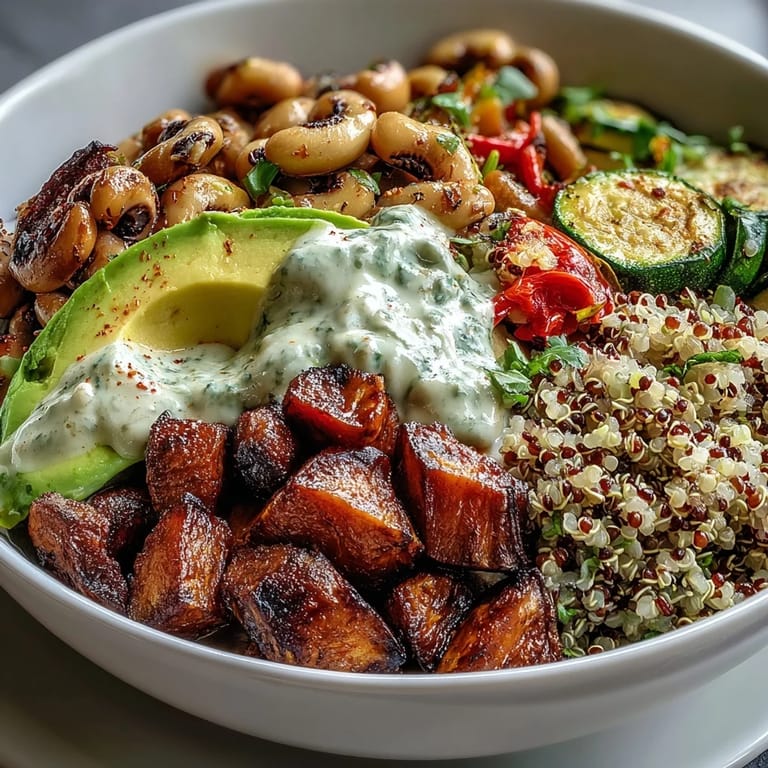
 There's something about assembling a Buddha bowl that makes you feel like you've got your life together, even if you're eating it straight from the kitchen counter at 6 PM on a Wednesday. I discovered this black-eyed pea version while trying to use up half a can of black-eyed peas and some sad spinach that was about to turn, and somehow it became the meal I crave when I need to feel grounded and nourished. The magic isn't in any single ingredient but in how they all come together—earthy, bright, creamy, and somehow filling without making you feel weighed down. It's the kind of bowl that tastes like you planned it for days, even though you probably didn't.
My neighbor stopped by while I was making this and asked what smelled so good—not the dressing, but the roasted vegetables caramelizing in the oven, that sweet paprika scent filling the kitchen. She stayed for dinner, and I remember her surprise when I told her the whole thing was vegan, how she said it felt substantial and real, not like rabbit food. That moment taught me that plant-based eating doesn't mean sacrifice; it means intention.
Ingredients
- Quinoa (1 cup, uncooked): The protein powerhouse that makes this bowl feel complete; rinsing it first removes bitterness and fluffs it beautifully when cooked.
- Sweet potato (1 medium, diced): Roasting caramelizes its natural sugars, creating pockets of sweetness that balance the earthy beans.
- Red bell pepper (1, chopped): Choose one that's smooth and unblemished; it'll roast to silky tenderness and adds color that makes the bowl Instagram-worthy (not that that matters).
- Red onion (1 small, sliced): The paprika and roasting mellow its sharpness, turning it into something almost sweet.
- Zucchini (1 small, sliced): Keep slices thick enough so they don't disappear in the oven; they should have presence in your bowl.
- Olive oil (2 tbsp): Don't skimp here—this is what creates golden, caramelized edges on everything.
- Smoked paprika (1/2 tsp): This spice is why your roasted vegetables taste like they came from a restaurant kitchen, not your oven.
- Black-eyed peas (2 cups cooked): Use canned if you're short on time, but rinse them well to remove excess sodium and any tinny taste.
- Ground cumin (1/2 tsp) and garlic powder (1/2 tsp): These warm spices wake up the beans and tie everything together.
- Baby spinach or kale (2 cups): Spinach wilts slightly from warm vegetables, while kale stays crisp; pick your texture preference.
- Avocado (1): Slice it just before serving so it doesn't brown; this is your fat and creaminess beyond the dressing.
- Fresh cilantro or parsley (2 tbsp, chopped): The brightness here is essential—it's the final note that makes everything sing.
- Tahini (1/4 cup): Buy good tahini if you can; cheaper versions can taste chalky and bitter.
- Lemon juice (2 tbsp, fresh): Bottled won't give you the same brightness, so squeeze real lemons.
- Maple syrup (1 tbsp): This balances the tahini's nuttiness and adds subtle sweetness without being cloying.
- Water (2 tbsp plus more): You'll use this to thin the dressing to your preferred consistency.
- Garlic clove (1 small, minced): Raw garlic in the dressing is sharp and alive; don't skip it even if you think you don't like raw garlic.
Tired of Takeout? 🥡
Get 10 meals you can make faster than delivery arrives. Seriously.
One email. No spam. Unsubscribe anytime.
Instructions
- Heat your oven and prep your vegetables:
- Turn the oven to 425°F (220°C) and while it preheats, peel and dice your sweet potato into roughly thumb-sized pieces so they roast evenly. Chop the bell pepper and zucchini into pieces that are also substantial enough to stand up to heat without shrinking to nothing.
- Toss and roast:
- Combine all your chopped vegetables with olive oil, smoked paprika, salt, and pepper in a bowl, making sure everything gets a good coating. Spread them on a baking sheet in a single layer and slide them into the oven; you want them to sizzle, not steam.
- Cook the quinoa:
- Rinse your quinoa under cold water in a fine-mesh strainer until the water runs clear, which takes longer than you'd think but matters more than you'd guess. Bring quinoa, 2 cups water, and salt to a boil in a saucepan, then reduce heat, cover, and let it simmer gently for 15 minutes—don't lift the lid and peek, even though you'll want to.
- Stir your vegetables halfway through roasting:
- Around the 12-minute mark, pull the sheet out and stir everything so it browns evenly on all sides. They're done when the sweet potato is fork-tender and edges are caramelized, which should take about 25 minutes total.
- Let the quinoa rest:
- When the 15 minutes are up, remove it from heat and let it sit covered for 5 minutes—this is when it finishes cooking in its own steam. Fluff it with a fork and it should be light and fluffy, not mushy.
- Warm the black-eyed peas:
- In a small skillet over medium heat, add your cooked black-eyed peas with the cumin and garlic powder, stirring occasionally for 3-4 minutes until they're warmed through and fragrant. This brief cooking helps the spices bloom and infuse into the beans.
- Make the tahini dressing:
- In a bowl, whisk tahini, lemon juice, maple syrup, minced garlic, and salt together until smooth and combined. Add water a tablespoon at a time, whisking as you go, until you reach a drizzle-able consistency—it should flow from a spoon but not be thin like vinaigrette.
- Assemble your bowls:
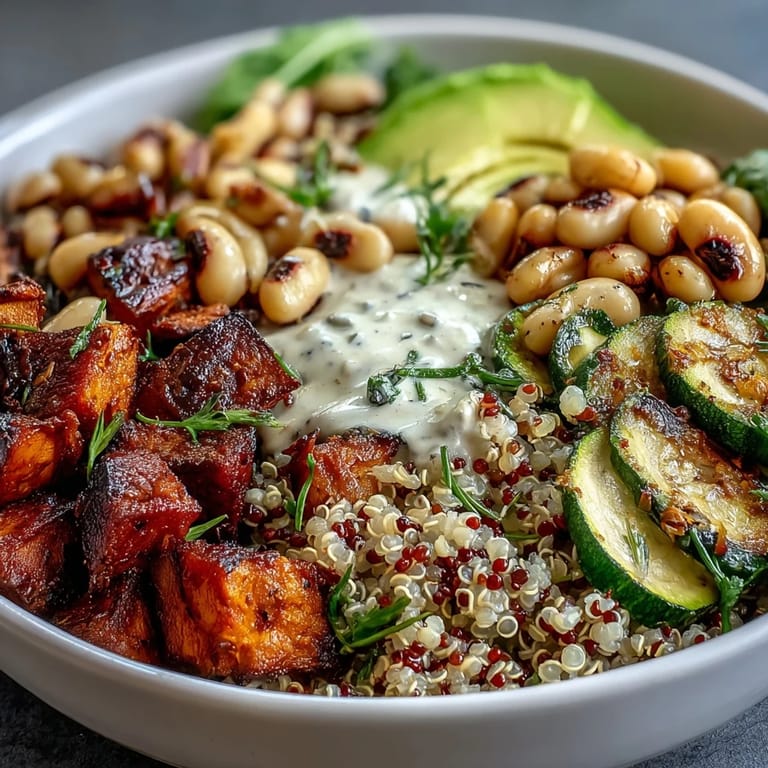
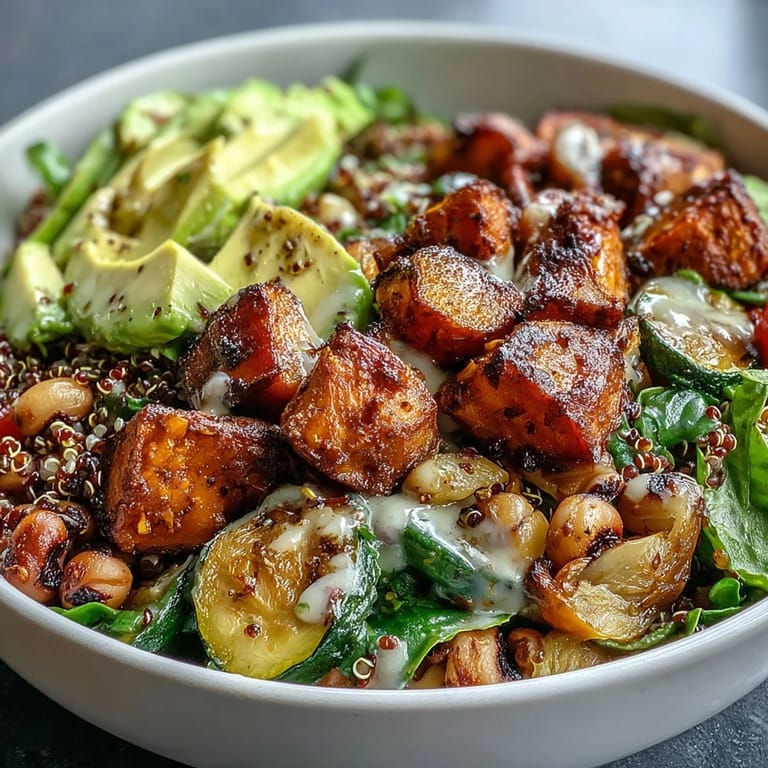
- Divide the quinoa between four bowls, creating a base, then top each with roasted vegetables, warmed black-eyed peas, and a generous handful of spinach or kale. Drizzle generously with the tahini dressing, then crown each bowl with avocado slices and a sprinkle of fresh cilantro or parsley, then serve immediately while everything is still warm.
 Pin it
 I made this bowl for myself on a Sunday morning when I was feeling depleted—not sick, just worn down by the week. Something about the act of roasting vegetables slowly, watching them transform, and then layering everything together with intention felt like an act of self-care that actually nourished me, not just my body but my mind. That's when I realized this wasn't just a recipe; it was a small ritual of taking care of myself.
When to Make This Bowl
This is your weeknight dinner when you want something that feels effortful but actually isn't, your meal prep for a week of lunches that don't get boring, your answer to the question "what do I eat when I'm trying to be healthier" without giving up deliciousness. It's also the bowl you make when you're cooking for someone who's vegan or gluten-free and you want them to feel like you didn't just throw together vegetables and call it a day. The timing works perfectly if you start the oven and quinoa simultaneously; by the time your vegetables are golden, everything else is ready.
Variations and Swaps That Actually Work
The beauty of this bowl is that it's genuinely flexible without becoming a chaotic free-for-all. I've swapped the quinoa for brown rice or farro when that's what I had, substituted roasted chickpeas when black-eyed peas felt boring, and added roasted broccoli, cauliflower, or Brussels sprouts depending on the season and my mood. The dressing stays the same because it's the glue that holds everything together, but once you have it dialed in, you can build endless variations. One time I added pomegranate seeds for brightness and crunch, another time I stirred some tahini dressing into the warm grains instead of just drizzling it on top, and both felt like revelations.
Storage and Make-Ahead Tips
This bowl actually improves slightly when you make it ahead, though you need to be strategic about assembly. The quinoa, roasted vegetables, and black-eyed peas all keep perfectly in separate containers in the fridge for up to 4 days, which means you can prep components on Sunday and assemble fresh bowls throughout the week. Keep the greens, avocado, and herbs separate and add them just before eating so you don't end up with a sad, wilted mess. The tahini dressing keeps for about 5 days in a sealed container, though it thickens slightly in the fridge—just whisk in a bit of water to loosen it back up before serving.
- Pro move: Make a double batch of the tahini dressing and use it on salads, grain bowls, and roasted vegetables all week.
- Transport easily: Pack components in separate containers and assemble your bowl just before eating for maximum texture and temperature contrast.
- Keep lemon juice handy: A squeeze of fresh lemon on the greens before eating brightens everything and prevents wilting since the acid partially preserves the leaves.
 Pin it
 This bowl taught me that nourishing yourself doesn't have to be complicated or time-consuming; sometimes it just takes a little intention and the willingness to layer flavors mindfully. Make it tonight, and you'll understand why it becomes a regular part of the rotation.
Recipe FAQs
- → Can I use dried black-eyed peas instead of canned?
Yes. Soak dried peas overnight, then simmer for 45-60 minutes until tender. One cup dried yields about 2-3 cups cooked.
- → What other grains work in this bowl?
Brown rice, farro, bulgur, or even cauliflower rice for a lighter option. Adjust cooking time accordingly.
- → How long does the tahini dressing keep?
Store in an airtight container in the refrigerator for up to one week. The dressing may thicken—simply whisk in additional water to loosen.
- → Can I meal prep these bowls?
Absolutely. Assemble everything except the avocado and dressing. Store components separately in the fridge for 4-5 days. Add fresh toppings when serving.
- → What vegetables can I substitute?
Try butternut squash, Brussels sprouts, carrots, or cauliflower. Roast any hearty vegetables that can withstand 425°F heat for 25 minutes.
- → Is this bowl freezer-friendly?
The grain base and roasted vegetables freeze well for up to 3 months. Add fresh greens, avocado, and dressing after thawing and reheating.