 Pin it
 Standing over a steaming pot of French Onion Soup on a rainy November evening, I watched the onions transform from sharp and pungent to mellow and sweet. The kitchen windows fogged as the broth simmered, filling my apartment with an aroma that seemed to seep into the walls themselves. My neighbor actually knocked on my door, curious about what magical thing was happening in my kitchen that smelled so divine. This soup has become my definition of comfort – slow, intentional cooking that rewards patience.
I first attempted this recipe during a bitter cold snap last winter when leaving the house seemed impossible. With nothing but basic pantry staples and some aging onions, I was skeptical but desperate. Three hours later, my kitchen transformed into a French bistro, and I found myself setting the table with actual linens and a candle, treating myself to a proper dinner despite being alone. Something about the process had turned an ordinary Tuesday into an occasion worth celebrating.
Ingredients
- Yellow onions: The foundation of this soup, these need patience more than anything else – I once rushed the caramelization and created an entirely different, inferior soup.
- Dry white wine: Acts as a flavor accelerator, bringing acidity that balances the sweet onions while helping to scrape up those precious browned bits from the bottom of the pot.
- Gruyère cheese: The traditional choice with its nutty, slightly sweet flavor that forms that perfect golden crust under the broiler.
- Fresh thyme: These tiny leaves offer an earthy, aromatic quality that quietly enhances the broth without stealing attention from the onions.
Tired of Takeout? 🥡
Get 10 meals you can make faster than delivery arrives. Seriously.
One email. No spam. Unsubscribe anytime.
Instructions
- Caramelize with patience:
- In a Dutch oven, melt butter with olive oil over medium heat, then add your thinly sliced onions, stirring to coat each strand. This is the soul of French onion soup – a slow dance that takes nearly 40 minutes as the onions gradually transform from sharp and pungent to meltingly soft and caramel-brown.
- Build the base:
- Once your onions have surrendered their sweetness, stir in minced garlic just until fragrant, then sprinkle flour over everything and cook for two minutes. The flour will look clumpy but worry not – it will create the perfect body for your soup.
- Create the broth:
- Pour in the wine, using your wooden spoon to scrape up the caramelized bits clinging to the bottom – this is pure flavor you're rescuing. Add stock, thyme, and bay leaf, then let everything simmer together for 20-25 minutes until the flavors meld.
- Prepare the crowning glory:
- While the soup simmers, brush baguette slices with olive oil and toast them under the broiler until golden on both sides. These will become the perfect cheese-supporting rafts that float atop your soup.
- Assemble and broil:
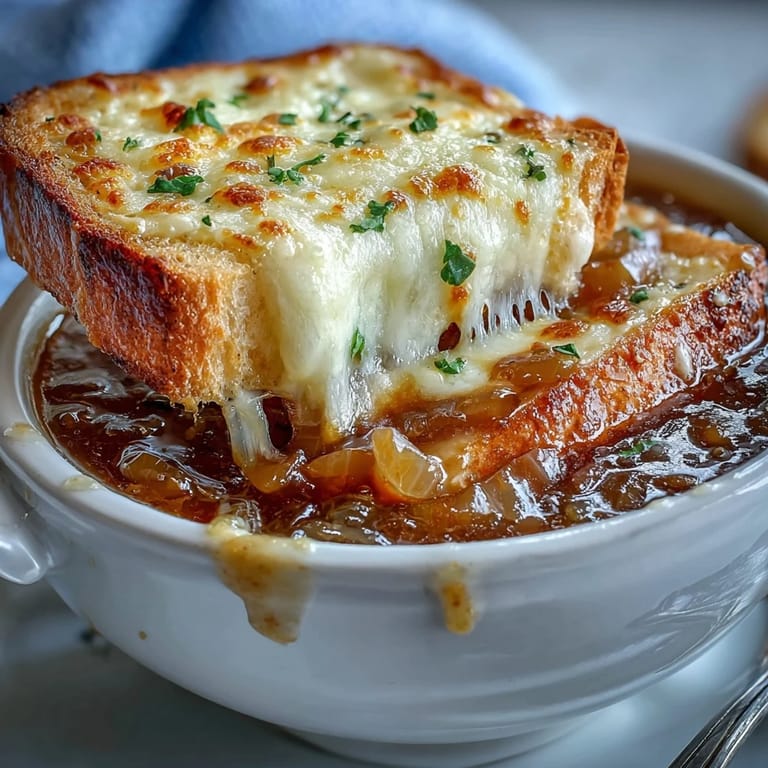
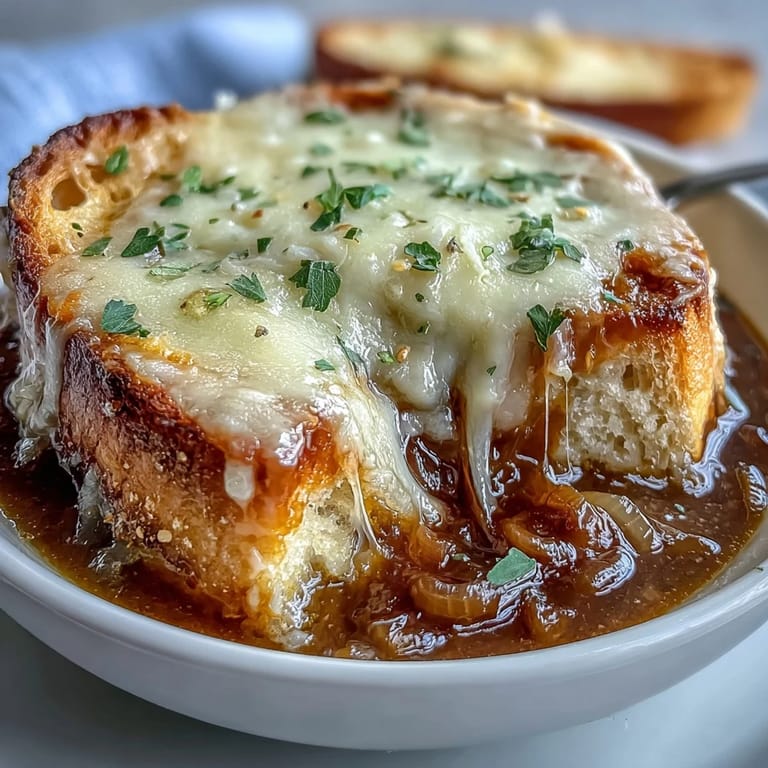
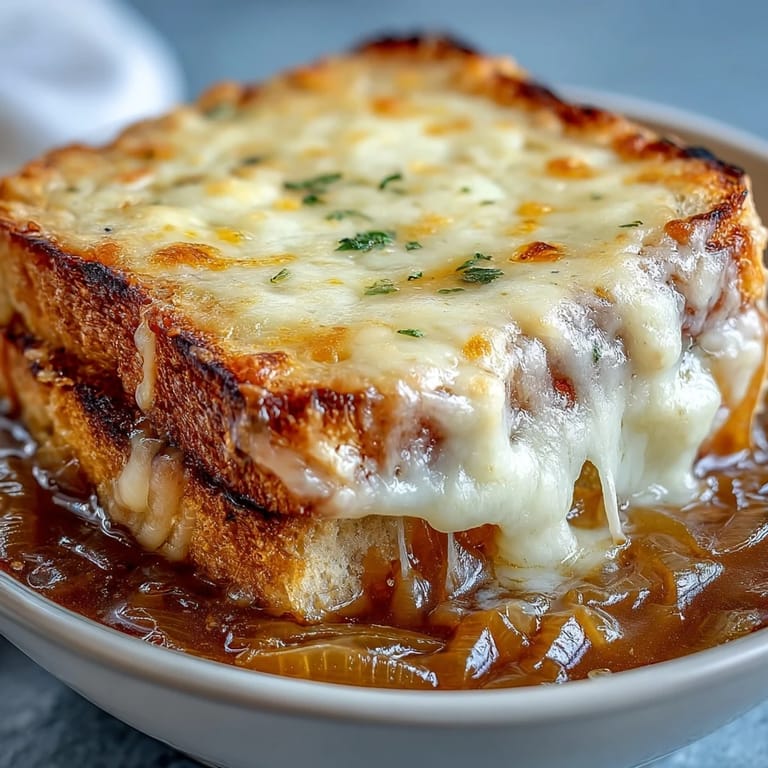
- Ladle the hot soup into oven-safe bowls, top each with a toasted baguette slice, then blanket generously with grated Gruyère. Place under the broiler for that magical 2-3 minutes when the cheese transforms into a bubbly, golden canopy.
 Pin it
 Last Christmas, my sister requested this soup instead of our traditional holiday starters. I was quietly thrilled but pretended it was an imposition. Standing side by side in her kitchen, we took turns stirring the onions, passing the wooden spoon between us when our stirring arms tired. The conversation flowed easily in that meditative space of shared cooking. When we finally served the soup in mismatched bowls (she only had two proper soup crocks), nobody seemed to mind – the table fell silent except for the sound of spoons breaking through cheese crusts.
The Secret of Caramelization
Many recipes rush the onion-cooking process, but authentic French onion soup demands at least 35 minutes of attention. I keep the heat at medium-low and stir just often enough to prevent burning, but not so much that the onions never get a chance to develop color against the hot pan. The transformation happens in stages – first they become translucent, then golden, and finally that rich mahogany that signals proper caramelization. The sugar and salt added halfway through arent just for flavor – they help draw moisture from the onions, accelerating the browning process.
Wine Selection Matters
While the recipe calls for dry white wine, Ive experimented with different varieties over the years. A crisp Sauvignon Blanc adds brightness, while an oaked Chardonnay brings subtle vanilla notes that complement the sweet onions beautifully. Avoid overly fruity wines, which can make the soup taste oddly tropical. And yes, the old advice stands true – never cook with a wine you wouldnt drink. I once used the remains of a bottle that had been open too long, and the soup carried a vinegary undertone that was impossible to mask.
Serving Suggestions
French onion soup can stand alone as a light meal, but it also makes a stunning first course for a special dinner. The richness means a little goes a long way, so consider serving in smaller portions if its just the opening act. Ive found the soup pairs wonderfully with crisp green salads dressed simply with vinaigrette – the acidity cuts through the cheesy richness perfectly.
- For an elegant dinner party, prepare the soup base a day ahead and reheat before the final bread and cheese assembly.
- Individual ramekins create a more impressive presentation than serving from a communal pot at the table.
- Allow the soup to cool slightly before serving to prevent burned mouths – the cheese stays molten longer than you might expect.
 Pin it
 This soup has taught me that some of the most extraordinary culinary experiences come from the humblest ingredients given proper time and attention. Its a reminder that transformation happens slowly, whether were talking about onions in a pot or people around a table.
Recipe FAQs
- → How long does it take to caramelize onions properly?
Proper caramelization takes 35-40 minutes over medium heat. Don't rush this step—the deep brown color and rich sweetness developed during this process are essential to the dish's authentic flavor. Stir frequently to prevent burning and ensure even browning.
- → Can I make this ahead of time?
Yes, actually it tastes even better made a day ahead. The flavors deepen and meld beautifully in the refrigerator. Simply store the soup and toasted bread separately, then add the cheese topping and broil just before serving for the best results.
- → What's the best cheese to use?
Gruyère is traditional and ideal for its nutty flavor and excellent melting properties. Emmental or Comté make wonderful French alternatives. For something different, try adding some Parmesan for extra depth or a bit of provolone for creaminess.
- → Why add sugar to the onions?
A small amount of sugar helps the onions caramelize more evenly and develop that characteristic deep brown color. It's not enough to make the dish sweet, but it assists the natural sugars in the onions during the long cooking process.
- → Can I use different stock?
Beef stock provides the richest, most traditional flavor. Vegetable stock works for a vegetarian version and still delivers excellent results. Many cooks find a combination of beef and chicken stock creates the most balanced depth of flavor.
- → What wine should I use?
A dry white wine like Sauvignon Blanc or Pinot Grigio works beautifully. You want something acidic enough to deglaze the pan but not too overpowering. The same wine you cook with makes an excellent pairing for serving.