 Pin it
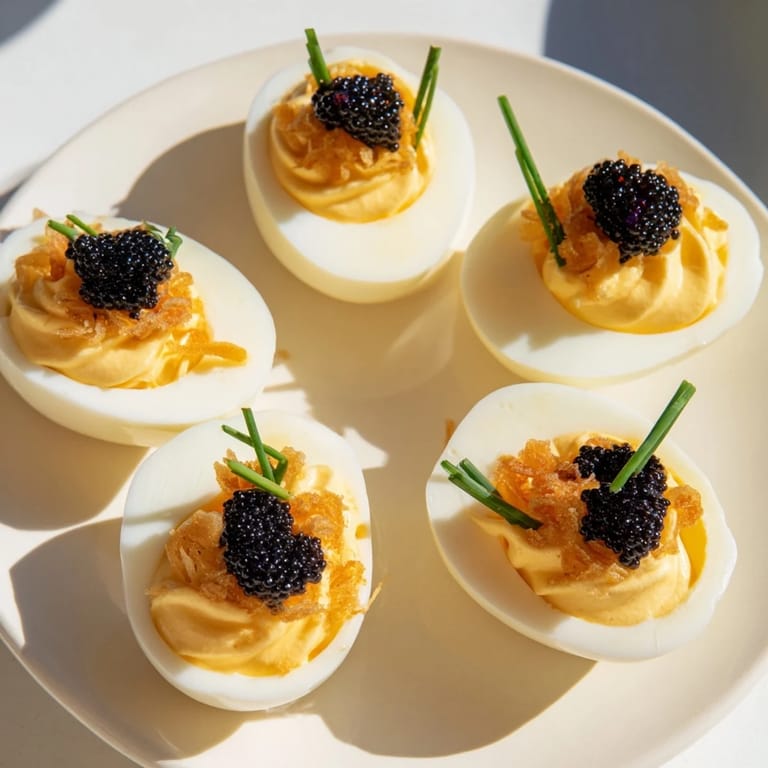
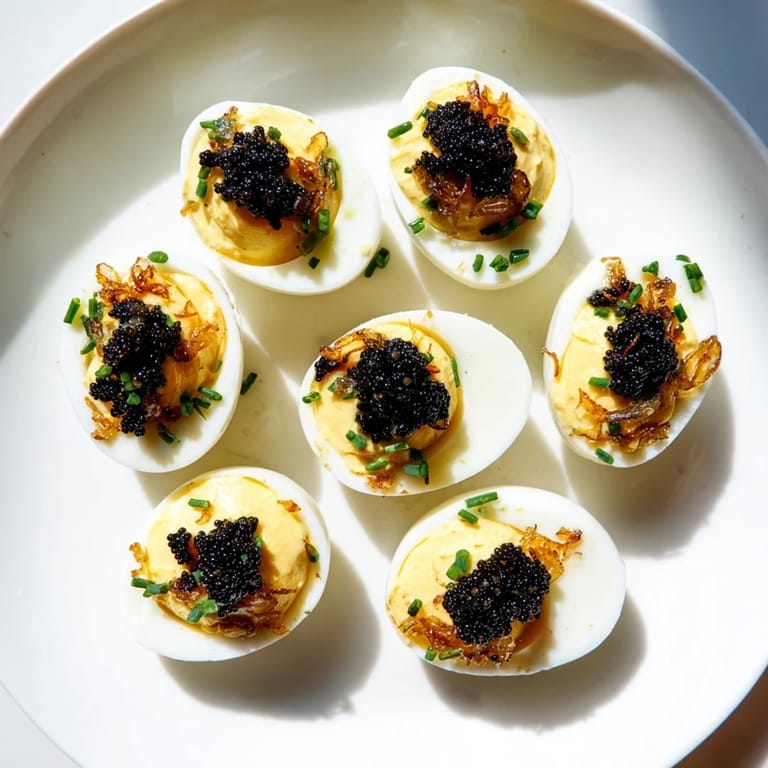
 There's something about deviled eggs that transforms a simple appetizer into theater. I discovered this version at a gallery opening where everything felt understated until the tray arrived—suddenly people gravitated toward those golden halves crowned with dark jewels of caviar and crackling shallots. The contrast of creamy yolk against crispy texture and briny caviar made me realize how a classic dish could whisper elegance instead of shouting it.
My friend brought these to a potluck and stood there quietly watching people's reactions—that tiny pause when someone bit into one and tasted the pop of caviar against the cool, tangy filling. She admitted later she'd been nervous about the fancy caviar, worried it might feel pretentious, but instead it just felt like someone had cared enough to make something special. That's the whole magic of this dish right there.
Ingredients
- Large eggs: Six eggs give you a generous dozen halves, and using large ones means sturdy whites that hold the filling without cracking.
- Mayonnaise: Three tablespoons is the foundation of richness; don't skimp on quality here because you'll taste every ingredient.
- Dijon mustard: Just a teaspoon adds a sophisticated edge that prevents the filling from tasting flat or one-dimensional.
- White wine vinegar or lemon juice: This brightness cuts through the richness and keeps the flavor from feeling heavy.
- Salt and black pepper: Use freshly ground black pepper—it makes a noticeable difference in taste and appearance.
- Paprika: A quarter teaspoon gives warmth and color, hinting at what's to come.
- Small shallot: Thinly slice it yourself for maximum crispiness when fried; pre-sliced shallots often have too much moisture.
- Vegetable oil: A neutral oil like vegetable or light canola works best for frying without competing flavors.
- High-quality caviar: Sturgeon is traditional, but paddlefish or salmon roe offers similar elegance at a friendlier price point.
- Fresh chives: Optional but they add a whisper of onion flavor and a professional finish.
Tired of Takeout? 🥡
Get 10 meals you can make faster than delivery arrives. Seriously.
One email. No spam. Unsubscribe anytime.
Instructions
- Boil the eggs gently:
- Place eggs in cold water, bring to a boil, then remove from heat and let them sit covered for 10 to 12 minutes. This method prevents that gray ring around the yolk and ensures a creamy center.
- Cool them completely:
- Transfer to an ice bath immediately—this stops the cooking and makes peeling so much easier. Take your time here; a cold egg practically falls out of its shell.
- Prepare the yolks:
- Gently scoop yolks into a bowl and mash with mayonnaise, mustard, vinegar, salt, pepper, and paprika until smooth. Taste as you go because you might want a touch more mustard or vinegar depending on your preference.
- Fill the whites:
- Use a spoon or a piping bag—the piping bag looks more polished but a spoon works just fine. Either way, pile the filling generously because these deserve it.
- Make the shallots crispy:
- Heat oil in a small skillet over medium heat until it shimmers slightly, then add your thin shallot slices. Stir constantly for 2 to 3 minutes until they turn golden and papery, watching carefully so they don't burn.
- Top and serve:
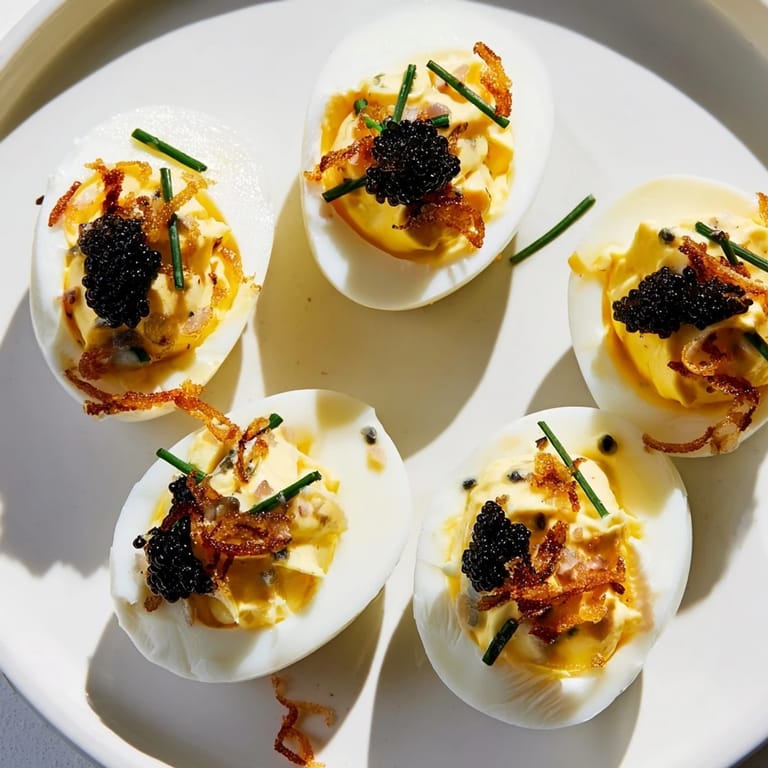
- Drain the shallots on paper towels, then crown each egg with a small dollop of caviar and a sprinkle of those crispy shallots. Garnish with chives if you're feeling fancy and serve right away.
 Pin it
 I once served these at a dinner where someone who'd never tried caviar took one and closed their eyes. When they opened them, they just smiled and asked for another. That's when I understood these weren't just eggs anymore—they were a small gesture of generosity on a plate.
The Temperature Balance
The contrast between the cool, creamy filling and the warm, crispy shallots is what makes this dish sing. Don't let the shallots sit—they'll soften if they wait, and that's when they lose their whole purpose. Serve everything at room temperature or slightly cool, and watch how the textures interplay against each other as people eat.
Caviar Selection and Alternatives
Sturgeon caviar is the traditional choice, but it's expensive and honestly, paddlefish or salmon roe tastes nearly identical and costs a fraction of the price. Both give you that same briny, delicate burst. The key is choosing a caviar that feels fresh and has a clean, oceanic smell—anything fishy or off means skip it. Store it in the coldest part of your refrigerator and use it within a few days of opening.
Make-Ahead Strategy and Storage
These eggs are wonderfully forgiving for entertaining because you can build them hours in advance without the toppings. Store the filled halves in a container in the fridge, and when your guests are about to arrive, quickly fry your shallots, add the caviar, and finish with chives. This approach means you're calm when people walk through the door instead of frantically assembling at the last second.
- Make the filling up to one day ahead and store it in an airtight container.
- Boil and halve your eggs early in the day, then fill them whenever you have time.
- Only add caviar and shallots in the final 5 minutes before serving for maximum impact.
 Pin it
 These deviled eggs have a quiet elegance that lets people feel a little special without any fuss on your part. Serve them with something cold to drink and watch them disappear.
Recipe FAQs
- → How do I achieve perfectly cooked eggs for this dish?
Boil eggs covered for 10–12 minutes, then cool in an ice bath to ensure firm whites and creamy yolks perfect for filling.
- → What is the best way to make crispy shallots?
Thinly slice shallots and fry them in vegetable oil over medium heat for 2–3 minutes until golden brown and crisp, then drain on paper towels.
- → Can I substitute the caviar with another ingredient?
Paddlefish or salmon roe offer more affordable options while maintaining a similar briny flavor and texture.
- → How should I store the prepared eggs before serving?
Prepare eggs ahead and keep refrigerated. Add caviar and crispy shallots just before serving to preserve texture and freshness.
- → What flavors complement these deviled eggs best?
The creamy, tangy filling pairs well with the salty caviar and crunchy shallots, complemented nicely by a glass of chilled Champagne or sparkling wine.