 Pin it
 I stumbled onto this dish completely by accident at a Korean BBQ night with friends when someone joked about making nachos with gochujang beef. What started as a laughing suggestion became the most requested appetizer at every gathering since. The collision of crispy tortilla chips with savory Korean marinades and melty cheese felt like a light bulb moment in my kitchen. Now whenever I mention Korean BBQ nachos, people's eyes light up before I even describe them.
The first time I made this for my sister's birthday, I was nervous the flavors would clash. But watching everyone reach for another nacho and hearing them ask if the beef was homemade felt like winning something small and real in the kitchen. She texted me the next day asking for the recipe before she'd even finished breakfast. That's when I knew this had become something special to hold onto.
Ingredients
- Flank steak or sirloin: Thin slices cook quickly and absorb the marinade beautifully, giving you tender beef in minutes instead of hours.
- Gochujang: This fermented chili paste is the soul of the dish, bringing umami and gentle heat that plays perfectly against cool vegetables.
- Soy sauce: Use regular or tamari if you need gluten-free, it rounds out the marinade with saltiness that deepens the beef.
- Sesame oil: A small amount goes far, adding that toasted richness that makes people ask what secret ingredient you used.
- Garlic and ginger: Mince them finely so they distribute evenly through the marinade and wake up every bite.
- Brown sugar: This balances the heat and saltiness, creating a subtle sweetness that lingers on your palate.
- Tortilla chips: Buy good ones that don't crumble easily, thicker chips hold up better under the weight of toppings and heat.
- Mozzarella and Korean cheese blend: The combination gives you stretch and flavor, melting into every crevice of the chips.
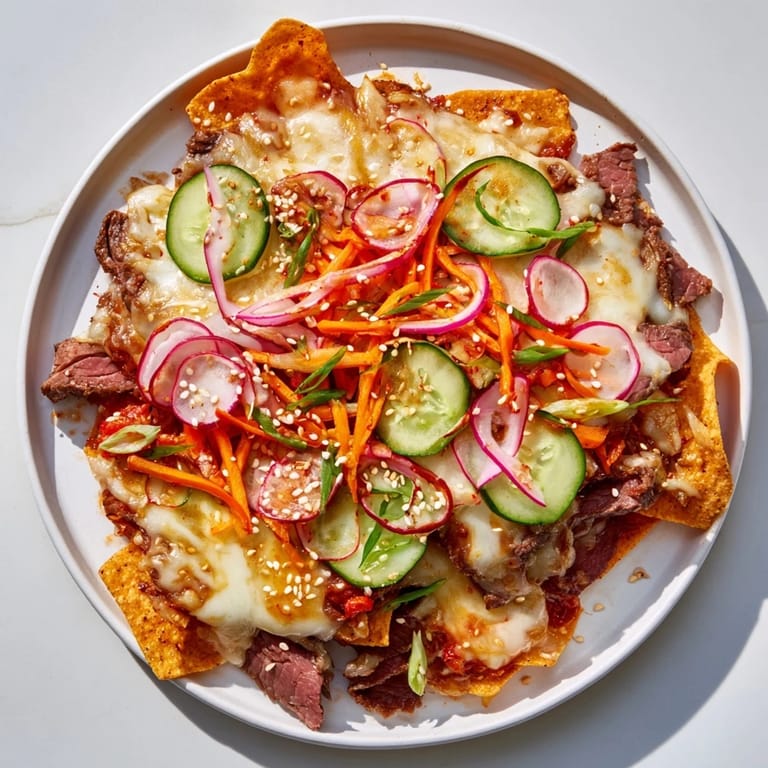
- Red onion, carrot, and cucumber: Keep these cool and crisp by adding them only after baking, so they stay fresh against the warm cheese.
- Scallions and sesame seeds: These finish touches add texture and a subtle nuttiness that brings everything together.
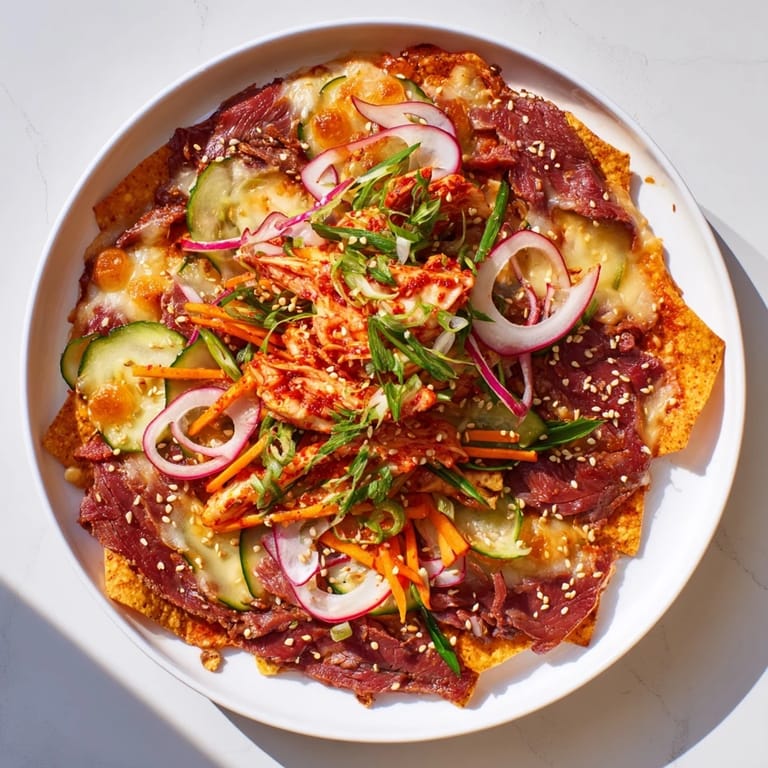
- Kimchi: Its funk and spice are the final flourish that makes people pause and ask what that incredible flavor is.
Tired of Takeout? 🥡
Get 10 meals you can make faster than delivery arrives. Seriously.
One email. No spam. Unsubscribe anytime.
Instructions
- Build your marinade:
- Whisk together gochujang, soy sauce, brown sugar, sesame oil, minced garlic, grated ginger, rice vinegar, and black pepper in a bowl until it smells like a Korean BBQ restaurant. Toss your beef slices through it, making sure every piece gets coated, then let it sit for at least 20 minutes so the flavors can settle in.
- Sear the beef:
- Heat your skillet until it's properly hot and add the marinated beef in a single layer, working in batches so nothing steams. You want a quick sear, about 2 to 3 minutes per batch, until the edges caramelize and the beef pulls away from the pan with a little resistance.
- Prepare your nachos base:
- Line a baking tray with parchment, scatter your tortilla chips across it in an even layer, then sprinkle half of your cheese blend over them. This first layer of cheese acts like glue for everything else.
- Layer and bake:
- Top the cheese with your seared beef, then finish with the remaining cheese so it covers everything and gets golden and bubbling. Pop the whole thing into a 200°C (400°F) oven for 6 to 8 minutes, until the cheese is melted and the edges of the chips are just starting to turn darker.
- Top with freshness:
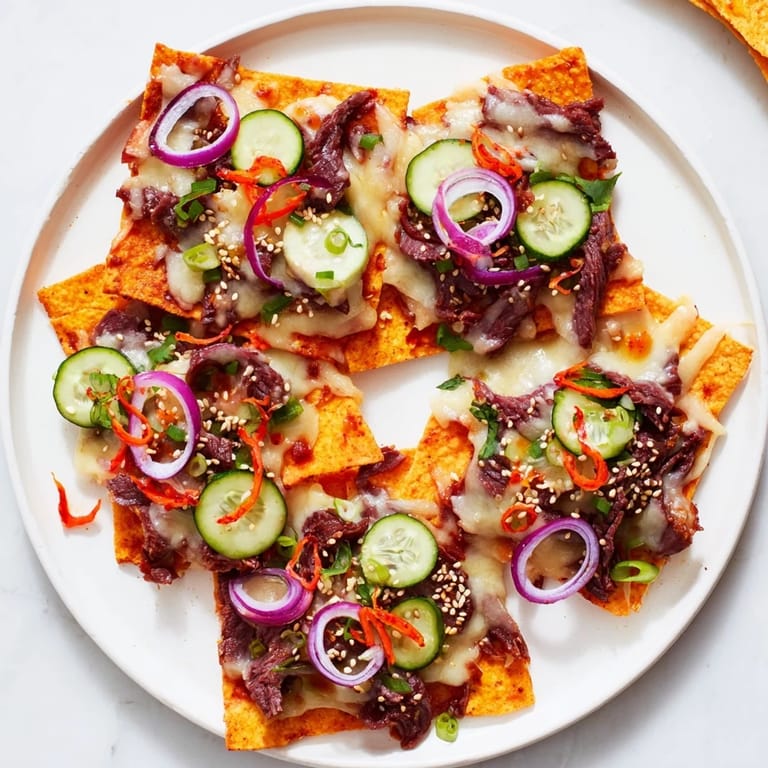
- The moment it comes out, scatter the cold vegetables, scallions, sesame seeds, and kimchi over the hot nachos so they stay crisp. The temperature contrast is part of the magic here.
- Finish and serve:
- Drizzle with sriracha mayo or gochujang mayo if you're using it, squeeze lime wedges over everything, and serve immediately while the cheese is still warm and the vegetables are still cool.
 Pin it
 There's a moment just after the nachos come out of the oven when the kitchen fills with this incredible smell of gochujang and melted cheese, and that's when people start gathering. This dish became my way of bringing Korean BBQ energy into a casual, shared-plate kind of meal. It's the kind of thing that makes a regular evening feel a little bit special.
Timing and Prep Strategy
You can marinate the beef hours ahead and keep it in the fridge, which actually lets the flavors develop even more deeply. Slice and prepare all your vegetables before guests arrive, store them in containers, and you're left with just searing the beef and baking the nachos when everyone's gathered in the kitchen. This is the kind of dish that rewards a little planning because it comes together so fast at the end. I learned this the hard way by trying to julienne carrots while everyone was already eating the first batch.
Protein and Variation Ideas
While beef is my go-to, I've experimented with marinating chicken thighs using the same gochujang blend and they're genuinely excellent, staying juicy and absorbing flavor even better than beef sometimes. For vegetarian nights, I've had surprising success with thick slices of marinated mushroom or even crispy tofu pressed and pan-fried in the same marinade. The sauce and toppings are flexible enough that switching proteins doesn't change the spirit of the dish at all. What matters most is that the marinade is bold and the assembly happens fresh and fast.
- Marinate chicken thighs for at least 30 minutes so the thicker meat has time to absorb the gochujang flavor.
- If you're using tofu, press it well first so it crisps up in the pan instead of steaming.
- Jackfruit works surprisingly well for a vegetarian option, shredded and seared until it picks up some color.
Cheese and Topping Customizations
I've learned that the cheese blend is more forgiving than I expected, and you can swap in cheddar, Monterey Jack, or even a blend with a little Gruyère for extra depth. The vegetables are honestly your chance to riff based on what's fresh and what you're craving that day. I've added avocado slices, pickled radish, crispy fried onions, and even a drizzle of gochujang mayo mixed with lime, and each version felt like a completely different dish. The structure stays the same, but the detail work is where you make it yours.
Serving and Pairing
These nachos are loud and bold, so they pair beautifully with something cold and crisp that cuts through the richness of the cheese and richness of the gochujang. A chilled lager beer is the obvious choice, but I've had great luck with crisp white wines and even chilled soju with fresh lime. This isn't a delicate dish, so you want beverages that are equally unapologetic and refreshing.
- Serve the nachos the moment they come out of the oven, as soon as the cheese stops actively bubbling.
- Set out extra lime wedges and sriracha mayo on the side so people can customize as they eat.
- Have small plates ready because despite being nachos, people will want to sit down with them, not stand around juggling.
 Pin it
 Every time I make these, it reminds me that the best food happens when you're willing to break the rules a little and trust your instincts. Korean BBQ nachos shouldn't exist, and yet here we are, and they're somehow exactly right.
Recipe FAQs
- → What cut of beef works best for the marinated topping?
Flank steak or sirloin sliced thinly works well for quick absorption of the gochujang marinade and fast cooking.
- → Can I substitute the beef for a vegetarian option?
Yes, marinated mushrooms or jackfruit make excellent plant-based alternatives, preserving the dish's flavor profile.
- → How do I achieve the melted cheese layer correctly?
Layer half the cheese on chips before adding cooked beef, top with remaining cheese, and bake until bubbly and golden.
- → What sauces complement the dish as a finishing touch?
Sriracha mayo or gochujang mayo adds a spicy, creamy kick that complements the bold flavors well.
- → Are there suggested side drinks to pair with this dish?
Crisp lager or chilled soju are traditional pairings that balance the rich and spicy notes here.
- → Can this dish be prepared ahead of time?
Marinate the beef in advance and assemble just before baking to maintain crispness of the tortilla chips.