 Pin it
 There's something about a Mediterranean salad that stops you mid-bite and makes you pause. I was at a small taverna in Athens one afternoon, the kind of place where the owner's mother still prepared food in a cramped kitchen, and I watched her toss together tomatoes, cucumbers, and feta with such unselfconscious confidence that I realized I'd been overthinking salad my entire life. She didn't measure anything, just knew when the olive oil and vinegar sang together. That meal came back to me every time I craved something bright and honest.
My sister made this salad the summer my nephew refused to eat anything green, and somehow he finished two plates. Not because she tricked him, but because the briny olives and salty cheese distracted him into actually tasting what was in front of him. It became her secret weapon at every family dinner after that, and now he asks for it specifically. That's when I knew this wasn't just a recipe—it was something that could shift a moment at the table.
Ingredients
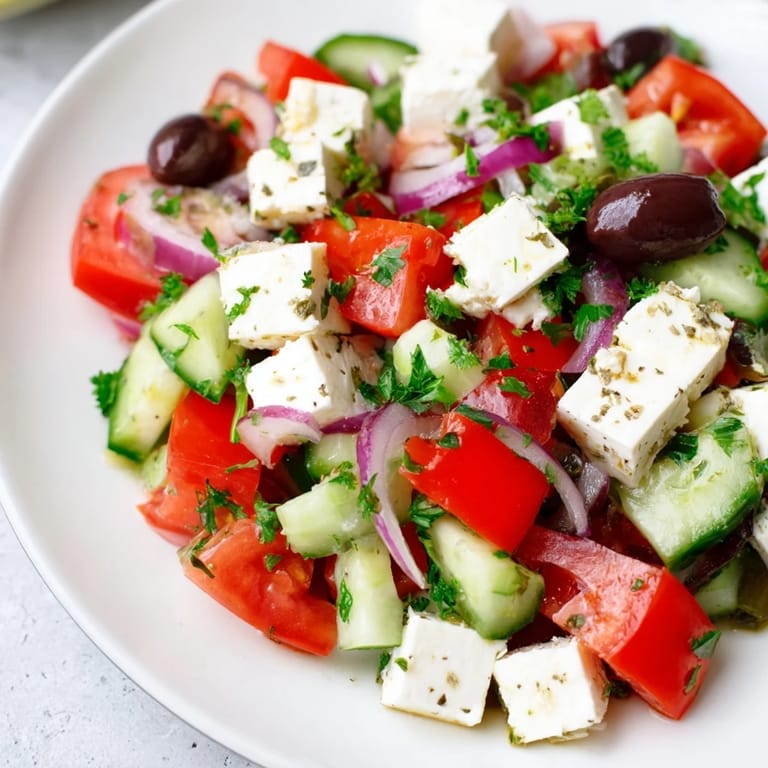
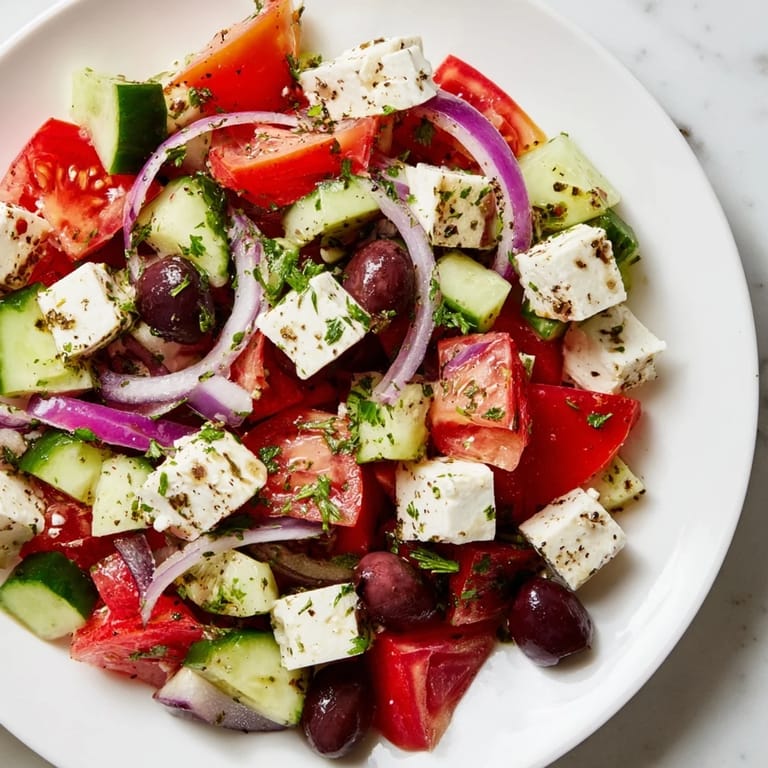
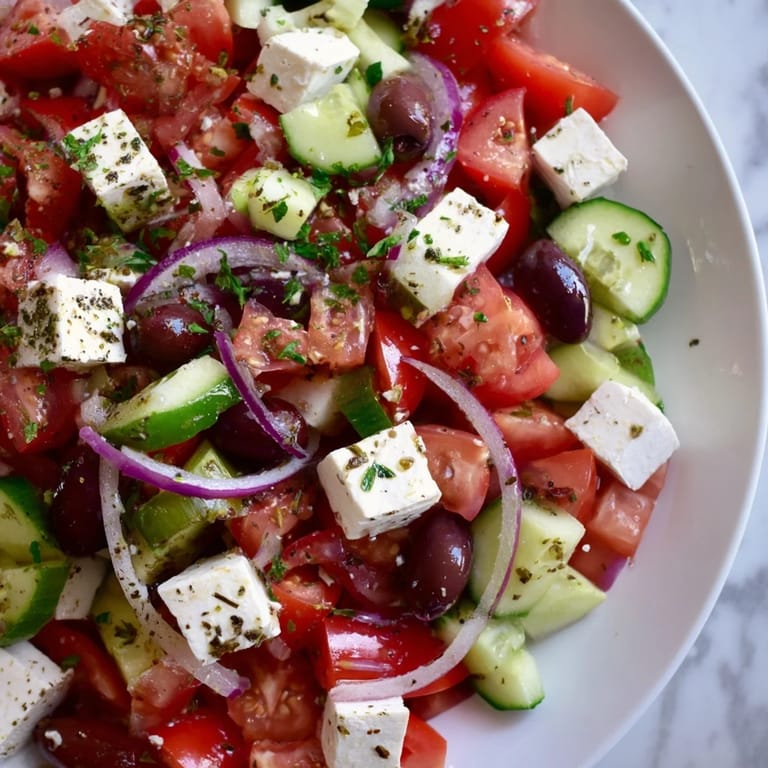
- Tomatoes: Use the ripest ones you can find, the kind that smell almost floral at the stem—they're what carries the entire salad.
- Cucumber: A crisp, seedless English cucumber keeps the salad from becoming watery, but regular cucumbers work if you scoop out some of the seeds.
- Red onion: The sharpness mellows as it sits with the other ingredients, so don't shy away from a generous slice.
- Feta cheese: Look for crumbly feta from the deli counter if you can, not the pre-crumbled stuff in plastic—the texture difference is real.
- Kalamata olives: They're worth the effort to pit yourself if needed; the flavor is earthier and less metallic than the pre-pitted versions.
- Extra virgin olive oil: This is not the time to save money—a fruity, peppery oil makes this whole thing come alive.
- Red wine vinegar: It adds a gentle bite without overwhelming the delicate vegetables.
- Oregano: Dried oregano is traditional here and actually more assertive than fresh, which is what you want.
Tired of Takeout? 🥡
Get 10 meals you can make faster than delivery arrives. Seriously.
One email. No spam. Unsubscribe anytime.
Instructions
- Start with the vegetables:
- Dice your tomatoes and cucumber into pieces roughly the size of olives—they should be substantial enough to hold their shape but small enough to eat in one bite. Slice the red onion thin enough to see light through it.
- Build the salad base:
- Combine the tomatoes, cucumber, onion, and olives in a large bowl. This is where you can taste as you go and add more salt or onion if something feels flat.
- Add the feta gently:
- Crumble or cube the feta and scatter it over the top without tossing yet—you want pockets of creamy cheese throughout, not feta dust.
- Make the dressing:
- Whisk olive oil and vinegar in a small bowl until they start to emulsify, then add the oregano, salt, and pepper. Taste it straight from the whisk; it should make your mouth water a little.
- Bring it together:
- Pour the dressing over everything and toss with a light hand, using a fork and spoon to turn the salad over itself gently a few times. If you have fresh herbs, add them now so they're at their brightest.
 Pin it
 I remember bringing this salad to a dinner party where the host had spent all day making a complicated braised dish, and by the end of the night, people were asking for my recipe instead. Nobody felt embarrassed about it—everyone just quietly acknowledged that sometimes the simplest thing is the most satisfying. It taught me that confidence matters more than complexity.
The Mediterranean Pantry
These ingredients work because they're the backbone of an entire region's cooking. Feta appears in everything from Greece to the Levant, olives are pressed and brined in every coastal kitchen, and red wine vinegar is the quiet workhorse that balances salt and fat. Once you understand why these flavors belong together, you stop feeling like you're following a recipe and start feeling like you're cooking the way people have for centuries. The oregano is almost ceremonial—it whispers Mediterranean just by being there.
When to Serve This
This salad doesn't need permission to be the main event. It's substantial enough to eat alone with some bread, flexible enough to sit beside grilled fish or chicken, and confident enough to hold its own at a summer table. I've served it at picnics, weeknight dinners, and impromptu lunches, and it never feels out of place. It's also one of those rare dishes that tastes even better the next day if you have leftovers, though honestly, you usually won't.
Small Variations That Feel Big
The beauty of this salad is that it invites you to wander a little without breaking anything. A handful of capers adds a sharp, briny note that feels like you've discovered something new. Roasted red peppers bring sweetness and texture. A splash of lemon juice instead of some of the vinegar makes it brighter. I've even made it with white beans on nights when I wanted something more substantial, and it never felt wrong—just like the salad was stretching to fit the moment.
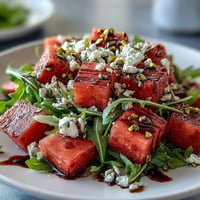
- Try adding crumbled or cubed watermelon feta if you can find it—the sweetness changes everything subtly and gorgeously.
- A whisper of garlic, either minced raw or crushed into the vinegar dressing, deepens the flavor without shouting.
- Fresh dill or mint in place of parsley brings a cool, almost sweet note that feels unexpected but right.
 Pin it
 This is the kind of salad that reminds you why people have been eating in the Mediterranean for so long. It's not about fancy technique or rare ingredients—it's about respecting what's fresh and letting it be what it is.
Recipe FAQs
- → What olives work best in this salad?
Kalamata olives are ideal due to their rich, briny flavor that complements the fresh vegetables and feta.
- → Can I substitute the feta cheese?
Yes, vegan feta or a mild crumbly cheese can be used for a dairy-free or different flavor profile.
- → How should the vegetables be prepared?
Tomatoes and cucumbers should be diced evenly, and red onion sliced thinly to balance textures and flavors.
- → Is it necessary to chill the salad before serving?
While immediate serving is common for freshness, chilling it briefly can enhance the melding of flavors.
- → What are good additions for extra flavor?
Sliced bell peppers, capers, or fresh herbs like parsley and mint can boost flavor and presentation.