 Pin it
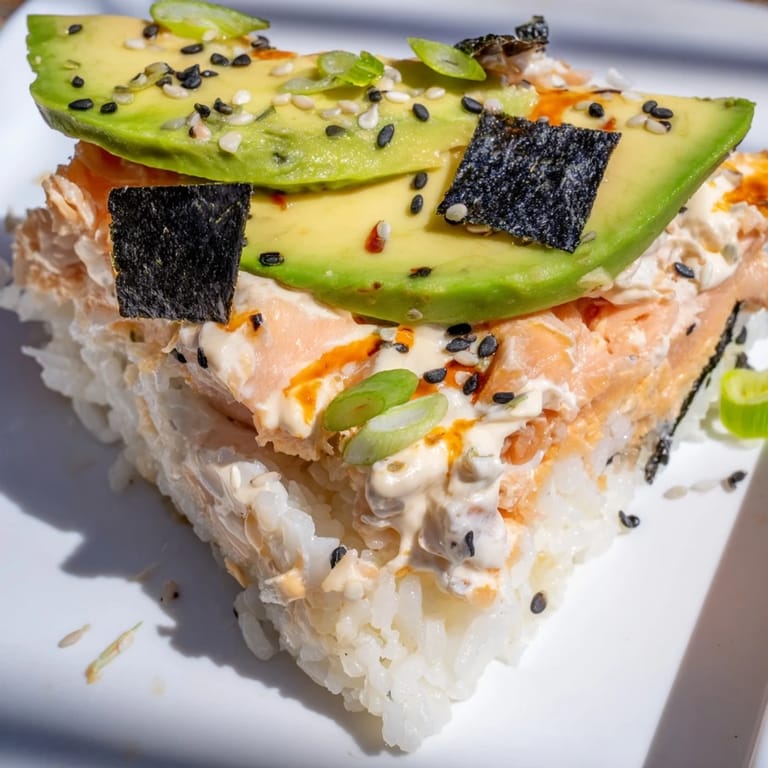
 I made this on a rainy Tuesday when I had leftover rice and salmon that needed using. My roommate wandered into the kitchen halfway through and said it smelled like our favorite sushi spot, which made me realize I was onto something. The idea of deconstructing sushi into a casserole felt a little rebellious at first, but after that first bite, warm and creamy and topped with cool avocado, I stopped worrying about authenticity. It tasted like comfort with a kick. Now it shows up on my table whenever I want something familiar but exciting.
The first time I served this was for a small birthday dinner, and I worried it might seem too casual. But when I brought the dish to the table with nori squares and sesame seeds scattered on top, everyone leaned in. One friend scooped a corner piece onto her plate and said it reminded her of her grandmother's chirashi bowl but easier to share. That night it became less about impressing anyone and more about creating something we could all dig into together, passing around the soy sauce and debating whether wasabi was necessary.
Ingredients
- Sushi rice: Short grain rice is essential here because it holds together without turning mushy, and rinsing it removes excess starch so every grain stays distinct.
- Rice vinegar: This is what gives the rice that signature tang, and mixing it with sugar and salt while the rice is still warm helps it absorb the flavor completely.
- Salmon fillet: I use skinless fillets because they flake cleanly, and brushing them with soy sauce before baking adds a layer of umami that soaks into every bite.
- Cream cheese: Softened cream cheese blends smoothly with mayo and creates that luscious creamy layer that makes this casserole feel rich without being heavy.
- Kewpie mayonnaise: Japanese mayo is tangier and slightly sweeter than regular mayo, and it makes a noticeable difference in the creaminess of the salmon mixture.
- Sriracha: A small drizzle adds gentle heat without overwhelming the other flavors, but you can skip it entirely if you prefer things mild.
- Avocado: Sliced fresh just before serving keeps it green and buttery, and the cool texture against the warm casserole is one of my favorite contrasts.
- Nori sheets: Cutting them into small squares makes them easy to grab with each bite, and roasted nori adds that oceanic flavor that ties everything back to sushi.
- Toasted sesame seeds: They add a nutty crunch that balances the creaminess, and I always toast mine in a dry pan for a few seconds to wake up the flavor.
- Spring onions: Thinly sliced green onions bring a sharp freshness that cuts through the richness and makes the whole dish feel brighter.
Tired of Takeout? 🥡
Get 10 meals you can make faster than delivery arrives. Seriously.
One email. No spam. Unsubscribe anytime.
Instructions
- Prepare the sushi rice:
- Rinse the rice under cold water until it runs clear, then combine with water in a saucepan and bring to a boil. Cover, reduce to low, and simmer for 15 minutes before letting it sit off the heat for 10 minutes so the grains finish steaming and turn tender.
- Season and spread the rice:
- Mix rice vinegar, sugar, and salt in a small bowl, then stir it into the warm rice with a fork to keep the grains fluffy. Press the seasoned rice evenly into a greased baking dish, creating a firm base layer that will hold everything together.
- Bake the salmon:
- Preheat your oven to 400°F and place the salmon on a parchment-lined tray, brushing it with soy sauce, sesame oil, and black pepper. Bake for 12 to 15 minutes until it flakes easily, then use a fork to break it into bite-sized pieces.
- Make the creamy salmon mixture:
- Combine softened cream cheese, mayo, sriracha, and lemon juice in a bowl until smooth and airy. Fold in the flaked salmon gently so it stays in chunks rather than turning into paste.
- Assemble and bake the casserole:
- Spread the salmon mixture evenly over the rice layer, then bake for 10 minutes until warmed through and the top starts to turn golden. The edges will bubble slightly, which is exactly what you want.
- Add fresh toppings and serve:
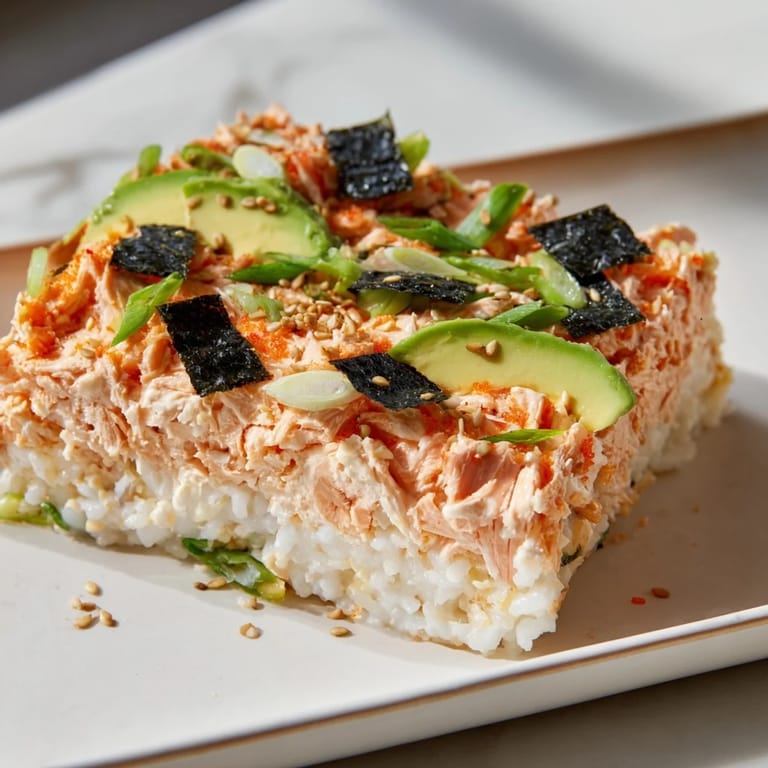
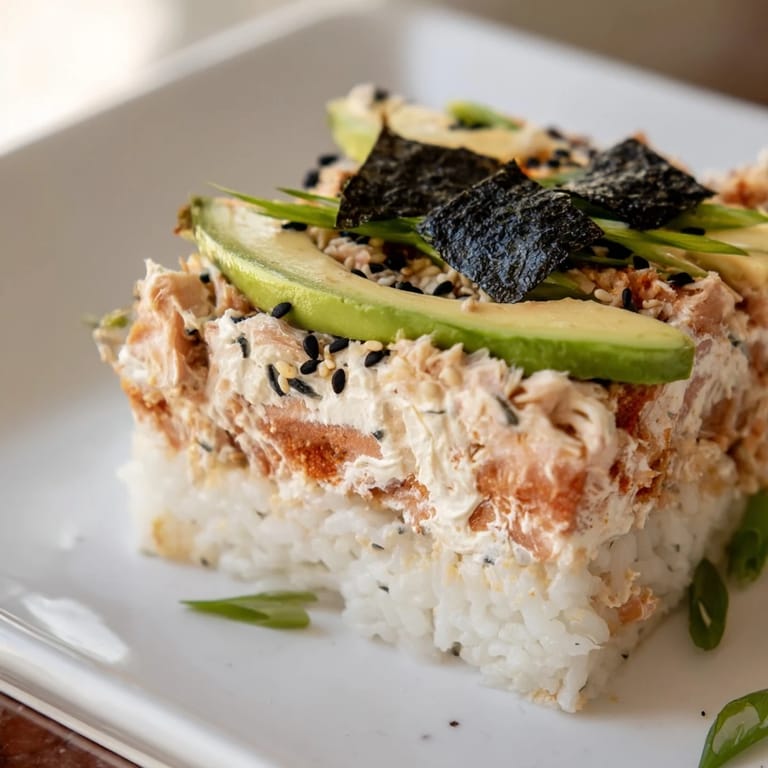
- Remove from the oven and immediately top with sliced avocado, nori squares, sesame seeds, and spring onions. Slice into portions and serve warm with soy sauce, pickled ginger, and wasabi on the side.
 Pin it
 One evening I made this for a potluck and watched people go back for seconds without saying much, just nodding while they chewed. A colleague later told me she had never thought of sushi as something you could bake, and that realization felt like a small victory. It reminded me that food does not have to follow rules to feel right, and sometimes the best meals are the ones that surprise you by being easier and more satisfying than you expected.
Variations You Can Try
I have swapped salmon for canned tuna when I was in a pinch, and it worked beautifully as long as I drained it well and mixed it with the creamy layer. Cooked crab or shrimp also make excellent substitutes, and I once used leftover grilled shrimp that added a smoky note I did not expect but loved. If you want a vegetarian version, try using finely chopped sauteed mushrooms or marinated tofu, though you may need to add a bit more soy sauce to keep the umami strong.
Serving Suggestions
This casserole is rich enough to stand alone, but I like to serve it with a simple cucumber salad dressed in rice vinegar and a pinch of sugar to cut through the creaminess. A bowl of miso soup on the side makes it feel like a complete meal, and if you are feeling fancy, pour chilled sake or a crisp Sauvignon Blanc to balance the richness. Leftovers reheat well in the oven, though I usually eat them cold straight from the fridge with extra soy sauce.
Storage and Make-Ahead Tips
You can assemble the entire casserole up to the baking step and refrigerate it covered for up to 24 hours, which makes it perfect for meal prep or hosting. When you are ready to serve, just bake it straight from the fridge, adding a few extra minutes to warm it through completely. I do not recommend adding the avocado, nori, or spring onions until right before serving because they lose their texture and color if they sit too long.
- Store leftovers in an airtight container in the fridge for up to 2 days.
- Reheat individual portions in the oven at 350°F for 10 minutes to keep the texture intact.
- Freeze the assembled unbaked casserole for up to 1 month, then thaw overnight in the fridge before baking.
 Pin it
 This dish taught me that comfort food does not have to be complicated, and that sometimes the best recipes are the ones that bend the rules just enough to feel new. I hope it finds a spot in your rotation the way it did in mine.
Recipe FAQs
- → What type of rice is best for this dish?
Sushi rice works best due to its stickiness and ability to hold layers together when baked.
- → Can I use different fish instead of salmon?
Yes, cooked crab meat, canned tuna, or cooked shrimp make excellent alternatives.
- → What’s the role of rice vinegar in the rice layer?
Rice vinegar seasons the rice, adding a subtle tang that balances richness from the creamy layer.
- → How can I add extra texture to this dish?
Sprinkling panko breadcrumbs on top before baking adds a pleasant crunch to the warm casserole.
- → What sides pair well with this casserole?
A crisp, dry white wine like Sauvignon Blanc or chilled sake complements the flavors nicely.