 Pin it
 I discovered this dish on a Tuesday evening when I had linguine and a can of coconut milk staring at me from opposite corners of my pantry. Out of curiosity more than hunger, I grabbed a jar of Thai green curry paste and wondered what would happen if I stopped thinking about cooking Italian or Thai separately and just let them collide on one plate. Twenty-five minutes later, my kitchen smelled like a Bangkok street market crossed with a trattoria, and I understood I'd stumbled onto something that made complete sense.
A friend came over unannounced on a random Thursday, and I made this while we talked, the pasta water bubbling away as I stirred the curry. She watched the red bell pepper soften into the coconut cream and asked if I'd taken a cooking class somewhere fancy. I hadn't—I just followed what felt right that evening, and somehow that made the compliment mean more.
Ingredients
- Linguine or spaghetti (350 g): The thinner the pasta, the better it catches the creamy sauce; I learned this after trying with penne and missing half the flavor.
- Vegetable oil (2 tbsp): Use something neutral that won't compete with the curry—coconut oil works beautifully if you want to lean into the flavor.
- Thai green curry paste (3 tbsp): This is your foundation, so taste the brand before committing; some are spicier than others, and that matters.
- Coconut milk (400 ml): Full fat isn't just recommended, it's essential—the watery stuff will give you a thin, sad sauce.
- Soy sauce (1 tbsp): Adds depth that the coconut might otherwise overshadow; don't skip it.
- Brown sugar (1 tbsp): Balances the heat and saltiness in a way white sugar never could.
- Fresh ginger (1 tsp, grated): The freshly grated kind wakes up the whole dish; powdered is just not the same.
- Lime juice (1 lime): The final brightness that makes you realize why this works so well.
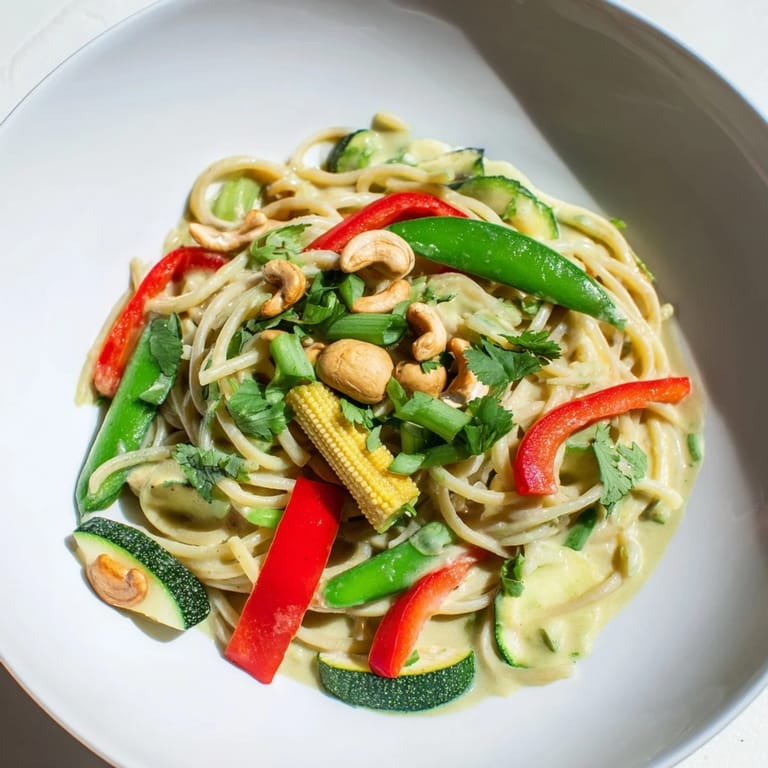
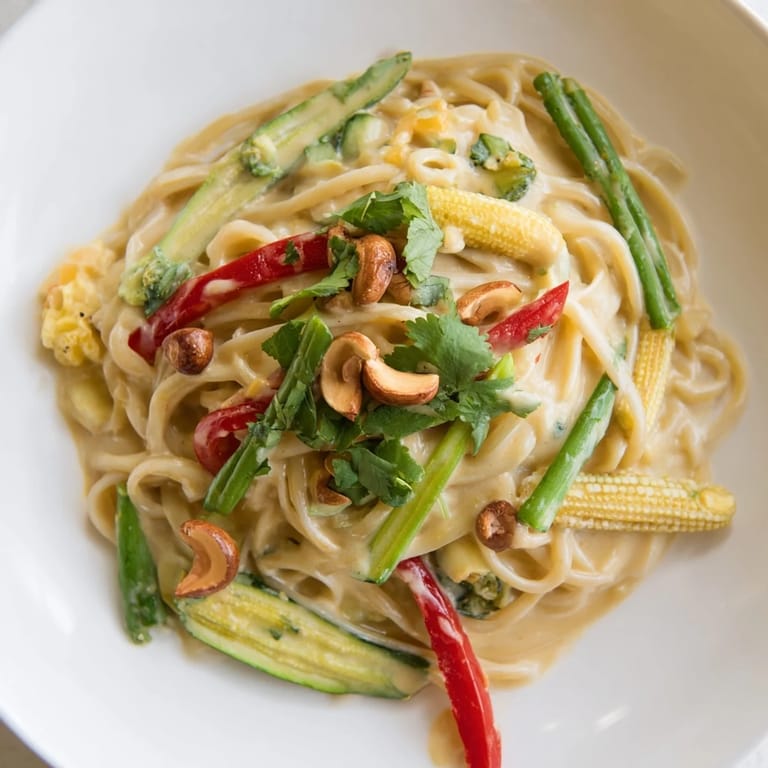
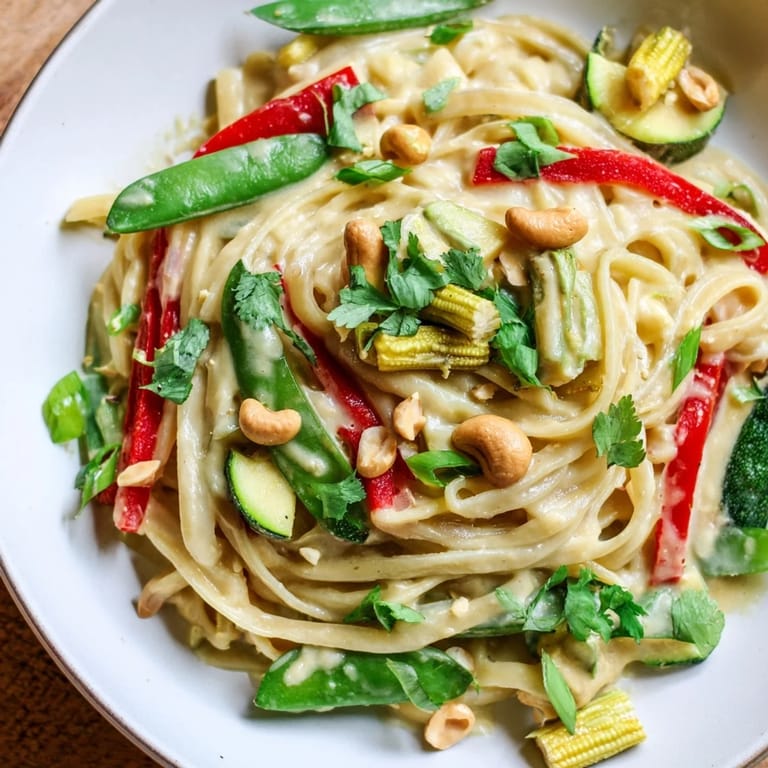
- Red bell pepper, zucchini, snap peas, baby corn: These stay crisp if you respect their cooking time; rushed vegetables taste like a regret.
- Spring onions and cilantro: Added at the end to keep them fresh and scattered across the top for color and bite.
Tired of Takeout? 🥡
Get 10 meals you can make faster than delivery arrives. Seriously.
One email. No spam. Unsubscribe anytime.
Instructions
- Start the pasta first:
- Salt your water generously so it tastes like the sea, then let it come to a rolling boil before you add the pasta. This head start means your sauce will be ready when the noodles are, and nobody's standing around waiting.
- Build the curry foundation:
- Toast the curry paste in oil until it smells almost alive, then watch the ginger bloom into the hot pan. You'll know it's ready when your kitchen fills with that distinctive green-spiced aroma.
- Simmer the sauce smooth:
- Pour in the coconut milk slowly while stirring, letting it create a silky base before you add the soy sauce and sugar. This gentle approach prevents lumps and creates something almost luxurious.
- Cook the vegetables with intention:
- Add them in one batch so they finish together, tender but still with a whisper of crunch. The baby corn and snap peas are quick, so don't turn away from the stove during these few minutes.
- Bring pasta and sauce together:
- Toss them together with some pasta water, which turns into liquid silk and helps everything coat evenly. The pasta will drink up the curry flavors in real time, so watch it happen.
- Finish with brightness:
- Spring onions, cilantro, and lime juice go in at the very end, so they stay sharp and green. Taste as you go, because this is where you claim the dish as your own.
 Pin it
 The moment everything came together was when I watched my roommate's eyes light up at that first bite—not because it was fancy, but because it tasted honest and bold. That's when I stopped thinking of this as a bridge between two cuisines and just called it dinner.
Adjusting the Spice to Your Comfort
Thai green curry paste sits at a different heat level depending on the brand, so start with 2 tablespoons if you're uncertain, taste the sauce, and add the third only if you're ready for it. The lime juice and brown sugar help soothe any fire, so you can always build heat but it's harder to take it back.
Making This Dish Your Own
While the vegetables I've listed are my favorites, this sauce is forgiving enough to welcome whatever is crisp and in your crisper drawer. Broccoli softens beautifully, carrots add a subtle sweetness, and even green beans feel at home in this curry.
Why This Works as Dinner for Guests
Everything happens in one skillet, which means less cleanup and more time with people you care about. You can prep the vegetables while the pasta cooks, and the whole meal comes together in the time it takes to set a table and pour wine. There's no last-minute panic, just the gentle confidence of a dish that knows what it's doing.
- Add cooked chicken or shrimp if you want to turn it into something hearty, stirring them in with the pasta so they warm through.
- A squeeze of lime juice right at the table lets everyone adjust the brightness to their taste.
- Roasted cashews or peanuts scattered on top add a textural surprise that nobody expects but everyone loves.
 Pin it
 This is the kind of meal that reminds you why cooking for yourself matters—it's not just about eating well, it's about feeling surprised by what you can create. Make it once, and you'll find yourself making it again and again.
Recipe FAQs
- → What type of pasta works best for this dish?
Linguine or spaghetti are ideal as they hold the creamy sauce well and complement the texture of the vegetables.
- → Can this dish be made vegan?
Yes, by using green curry paste without shrimp or fish sauce and ensuring no animal products in other ingredients, this dish is suitable for vegans.
- → How do I adjust the spice level?
Modify the amount of green curry paste according to your heat preference. Adding sliced red chili can increase spiciness if desired.
- → What are good accompaniments for this meal?
This pasta pairs well with a crisp, aromatic white wine like Riesling or a light side salad to balance the richness.
- → Can I add protein to this dish?
Yes, cooked chicken, shrimp, or tofu can be added for extra protein without altering the core flavors.
- → How should leftovers be stored?
Store in an airtight container in the refrigerator for up to two days. Reheat gently to preserve sauce texture and vegetable crispness.