 Pin it
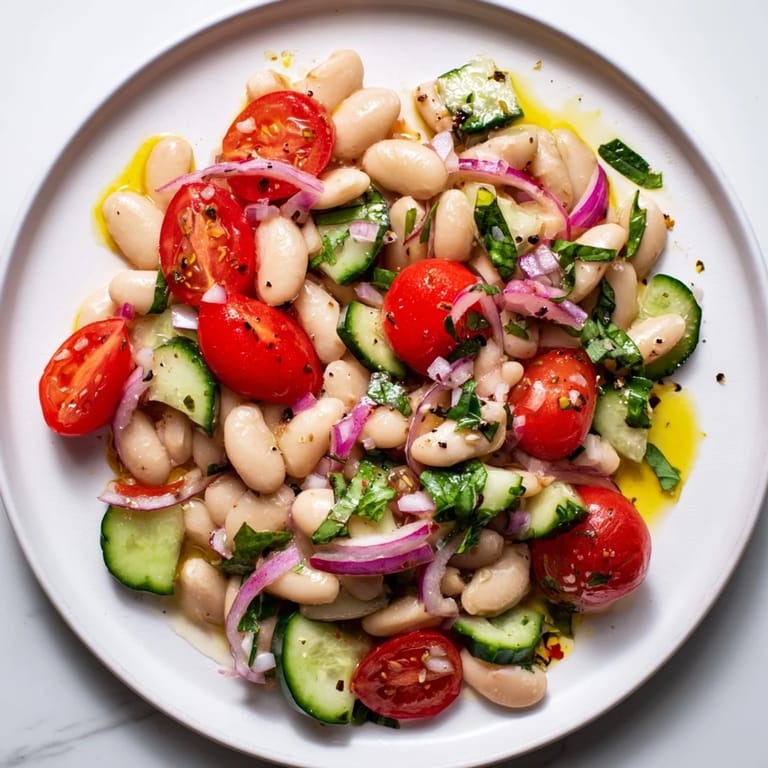
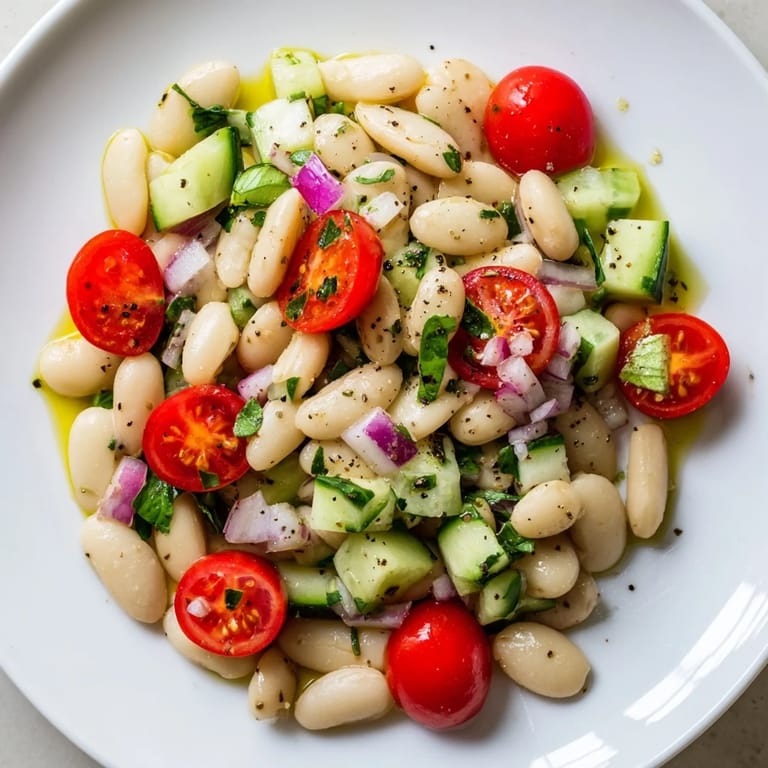
 There's something about a bowl of white beans that caught me off guard the first time I really tasted one. I wasn't looking for a revelation in a salad, but there it was—crisp tomatoes meeting creamy beans, herbs releasing their green brightness into every bite. What started as a quick lunch became the thing I reach for when the weather turns warm and my kitchen suddenly feels too hot for anything elaborate.
I made this for a potluck on a sweltering July afternoon, nervous because everyone else brought things that required actual effort. But people kept coming back to my bowl. Someone's kid, who normally picks around everything green, ate three servings and asked if I could make it again. That moment taught me that simple food, done with care, doesn't need apologies.
Ingredients
- Cannellini beans: Buy them canned to save time, but rinse them thoroughly under cold water—it removes the starchy liquid that makes them mushy.
- Cherry tomatoes: Halve them and let them sit for a minute after cutting; the juices that pool are pure flavor.
- Red onion: Dice it fine so it melts into the salad rather than overpowering each bite.
- Fresh herbs: This is where the salad gets its personality—don't skip the basil and parsley, and use fresh oregano if you can find it.
- Extra-virgin olive oil: The better your oil, the less you notice you're eating something so simple.
- Red wine vinegar: It adds brightness; lemon juice works if that's what you have, but the vinegar has a slight depth that makes the dressing feel complete.
- Sea salt and black pepper: Taste as you go—this matters more than the measurements.
- Kalamata olives and feta: Optional but worth it if you have them; they turn a side dish into something you could eat on its own.
Tired of Takeout? 🥡
Get 10 meals you can make faster than delivery arrives. Seriously.
One email. No spam. Unsubscribe anytime.
Instructions
- Gather and prep everything first:
- Rinse your beans, halve your tomatoes, mince your garlic until your fingers smell like it. Mise en place isn't fancy—it just means nothing gets forgotten and you're not hunting for ingredients mid-toss.
- Build the base:
- Pour the beans into your biggest bowl, then add tomatoes, onion, cucumber if you're using it, and garlic. This is the part where your salad starts to take shape.
- Add the herbs:
- Scatter parsley, basil, and oregano over everything. The herbs should look generous—you want flecks of green throughout, not an afterthought sprinkle.
- Make the dressing:
- Whisk olive oil and vinegar together in a small bowl until they start to come together, creamy-looking rather than separated. Season it—really season it—then taste it by itself before adding to the salad.
- Bring it all together:
- Pour the dressing over the salad and toss gently, being careful not to break the beans apart. If you're using olives and cheese, fold them in last so they don't get bruised.
- Taste and adjust:
- This is the moment that matters most. Does it need more salt? More acid? Trust your mouth, not the recipe.
 Pin it
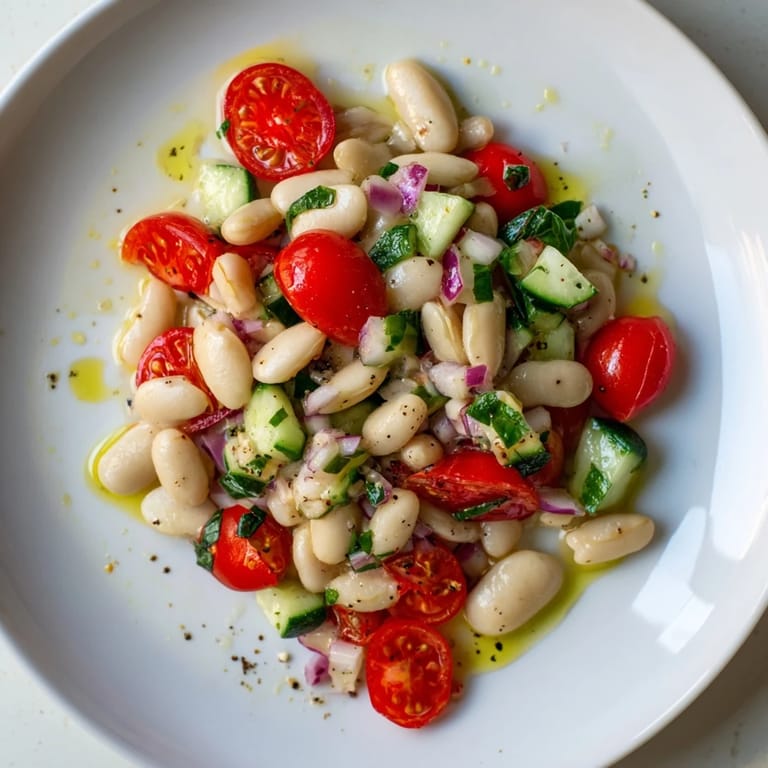
 I learned the real magic of this salad came not from the first bite, but from eating the same bowl the next day. The flavors had mingled overnight, the beans softened just slightly, and suddenly it tasted like something I'd been craving without knowing it. That's when I stopped thinking of it as a side dish.
When to Make This
This salad belongs on warm days when you don't want to cook, or when you need something to bring somewhere and you want people to feel like you actually tried. It's equally at home in a lunchbox as it is on a dinner table. Make it in bulk on Sunday and you'll have lunch for most of the week, though it tastes best within three days.
Ways to Build on It
The bones of this salad are forgiving. Swap white beans for chickpeas if you prefer them, or add a handful of arugula if you want something peppery underneath. Some people I know add crumbled feta right at the end, others slip in sliced hard-boiled eggs. A friend once threw in chopped sun-dried tomatoes and I've thought about that choice every summer since.
Storage and Serving
This salad is best served at room temperature, but it's equally good cold straight from the refrigerator. It keeps for three to four days in a covered container, though the longer it sits, the softer the tomatoes become. If you're making it ahead for a picnic or party, pack the dressing separately and toss everything together right before serving.
- Let it marinate for at least 30 minutes if you have the time—the flavors deepen and meld beautifully.
- If it seems dry the next day, drizzle in a little more olive oil and vinegar rather than adding water.
- Bring it to room temperature before serving if it's been chilled, and always taste before serving to see if it needs one more pinch of salt.
 Pin it
 This salad has become my go-to when I'm not sure what to make, the kind of thing that feels effortless but tastes intentional. It's proof that you don't need fancy ingredients or techniques to cook something people actually want to eat.
Recipe FAQs
- → Can I use different beans in this salad?
Yes, great northern or navy beans make great alternatives to cannellini beans while maintaining a similar creamy texture.
- → How long should the salad marinate for best flavor?
Letting the salad sit for a few hours in the refrigerator allows the flavors to meld and intensify beautifully.
- → Is the olive oil dressing necessary?
The olive oil and red wine vinegar dressing balances the freshness of the ingredients, enhancing the overall flavor and texture.
- → Can I omit the feta cheese?
Absolutely. Omitting feta makes the dish vegan-friendly without compromising on taste thanks to the fresh herbs and dressing.
- → What side dishes pair well with this salad?
It complements grilled fish, chicken, or crusty bread, and can be enhanced with additional greens like arugula or spinach.