 Pin it
 My neighbor brought over a container of this curry one winter evening, and I was immediately transported by the aroma wafting from her kitchen into mine. She'd been experimenting with black-eyed peas after visiting her cousin in Mumbai, and this was her third attempt at capturing that balance of creamy coconut and warming spices. When I tasted it, something clicked—it felt both deeply comforting and unexpectedly sophisticated, the kind of dish that makes you wonder why you haven't been making it all along.
I made this for a small dinner party last spring, and my friend Sarah—who'd been vegetarian for only a few months—asked for the recipe before dessert even arrived. She said it was the first time since changing her diet that she felt genuinely satisfied, not like she was eating around something. Watching her go back for seconds while everyone else did the same told me everything I needed to know about this curry.
Ingredients
- Black-eyed peas: Use canned if you're short on time, but rinse them well to avoid excess sodium and that slightly metallic taste you sometimes get—it makes a real difference.
- Coconut oil: The slight sweetness here balances the spices beautifully, though vegetable oil works if you don't have it on hand.
- Onion, garlic, and ginger: This trio is your flavor foundation, and taking time to chop them properly means they'll cook evenly and release their aromatics without burning.
- Ground cumin and coriander: These warm spices are what make this feel like a proper curry rather than just a stew with coconut milk.
- Turmeric: Beyond its golden color and earthy flavor, it adds a subtle earthiness that ties everything together, plus it's genuinely anti-inflammatory.
- Garam masala: Save this for the very end—added at the beginning, it can turn bitter, but stirred in at the finish, it brightens the whole dish.
- Coconut milk: Don't skip the full-fat version if you can find it; the richness is essential to the sauce's body.
- Diced tomatoes: They add acidity that cuts through the richness and helps the spices meld into something cohesive.
- Green peas: Frozen is perfectly fine here and honestly more convenient; they add sweetness and texture without requiring any special prep.
- Fresh cilantro and lime: These finishing touches brighten everything at the end, preventing the curry from feeling heavy.
Tired of Takeout? 🥡
Get 10 meals you can make faster than delivery arrives. Seriously.
One email. No spam. Unsubscribe anytime.
Instructions
- Temper the spices:
- Heat your coconut oil in a large saucepan over medium heat and add mustard seeds if you have them—they'll pop and sizzle, releasing a nutty flavor that signals everything is about to get delicious. Listen for that sizzle; it takes about 30 seconds.
- Build your aromatics:
- Add your chopped onions and let them cook until they turn soft and golden, which usually takes about 5 minutes. They should smell sweet and slightly caramelized, not sharp or raw.
- Layer in flavor:
- Stir in minced garlic, grated ginger, and green chilies if using, cooking for just 1 to 2 minutes until the kitchen smells like pure fragrance. This is where the curry starts to feel real.
- Bloom the dry spices:
- Add your cumin, coriander, turmeric, chili powder, and black pepper all at once, stirring constantly for about a minute. You'll notice the spices release their oils and the whole mixture darkens slightly—that's exactly what you want.
- Build the sauce base:
- Pour in your diced tomatoes and let them break down for about 5 minutes, stirring occasionally. The tomatoes will soften and begin to release their juice, creating a rich base for the coconut milk.
- Add the peas:
- Stir in your cooked black-eyed peas and frozen green peas, mixing until everything is well combined and coated in that spiced tomato mixture.
- Bring it together:
- Pour in the coconut milk and vegetable broth, stirring gently until you have a creamy, coherent sauce. Bring it to a gentle simmer—not a rolling boil, which can cause the coconut milk to separate.
- Let it simmer:
- Leave it uncovered for 15 to 20 minutes, stirring occasionally, while the flavors meld and the sauce thickens slightly. You'll notice the color deepen and the aroma become more concentrated.
- Finish with brightness:
- Stir in the garam masala and lime juice at the very end, tasting as you go and adjusting salt if needed. The lime juice cuts through the richness while the garam masala adds one final layer of warmth.
- Garnish and serve:
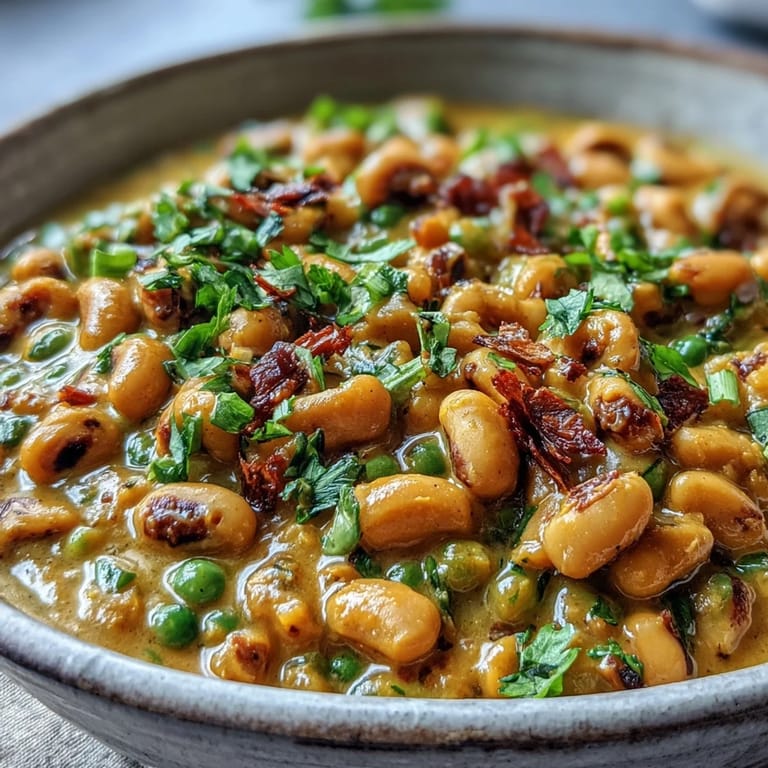
- Top each bowl with a generous handful of fresh cilantro and serve hot alongside basmati rice or warm naan. The cilantro adds a fresh, herbaceous note that prevents the curry from feeling heavy.
 Pin it
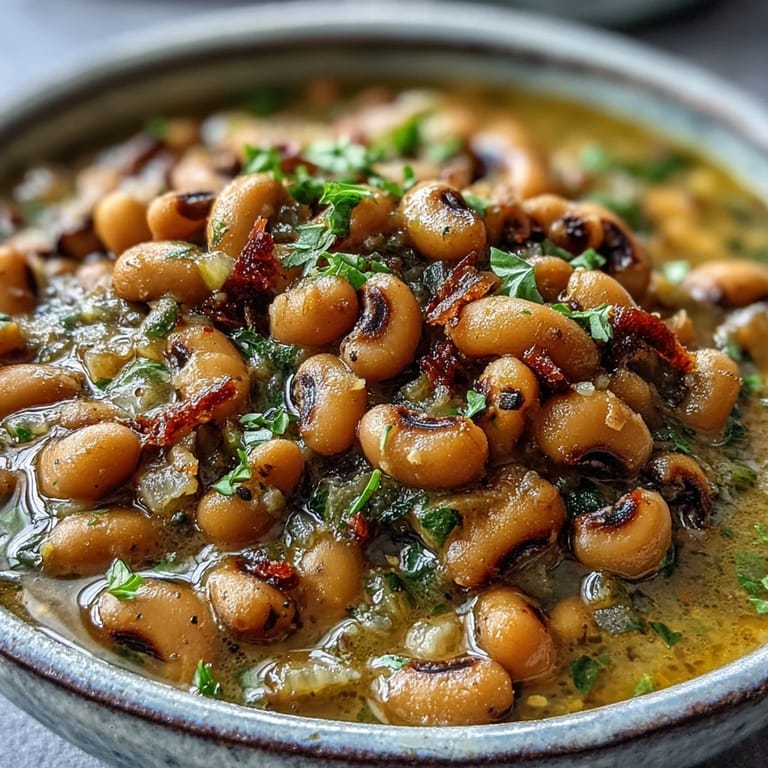
 There's something quietly magical about watching someone taste this curry for the first time and realizing they're experiencing what comfort food means when you remove the dairy and meat but keep all the soul. It's become the dish I make when I want to feed people something that feels both nourishing and adventurous.
Customizing Your Curry
This curry is forgiving enough to adapt to what you have on hand, which is part of why I keep making it. If you don't have black-eyed peas, chickpeas or kidney beans work beautifully and will give you slightly different textures and flavors—chickpeas add a buttery quality, while kidney beans are earthier and denser. You can also swap the green peas for cauliflower florets, spinach, or even diced sweet potato if you want to change things up, though you might need to adjust cooking time slightly if you're using something that takes longer to soften.
Balancing Heat and Spice
I've learned that heat tolerance varies wildly from person to person, and this recipe respects that by keeping the chili powder moderate and optional. If you like things milder, use just a pinch of chili powder and skip the fresh green chilies—the ginger and garam masala will still give you that warming sensation without any bite. For those who want more heat, add extra chili powder, fresh chilies, or even a pinch of cayenne pepper, but add it slowly and taste as you go, because it's easy to make something unbearably hot and impossible to dial back.
Serving and Storage Wisdom
This curry actually tastes better the next day once everything has settled and the flavors have had time to deepen, so don't hesitate to make it ahead. It keeps well in the refrigerator for about four days in an airtight container, and you can also freeze it for up to three months if you want to have it on hand for rushed weeknights.
- Reheat gently over medium heat with a splash of vegetable broth or coconut milk if the sauce has thickened too much in storage.
- Serve with basmati rice, jasmine rice, or warm naan to soak up every last drop of that silky sauce.
- Pair it with a simple cucumber salad or raita if you want something cool and fresh on the side to balance the warmth of the spices.
 Pin it
 This curry has quietly become one of those dishes I reach for when I want to cook something that feels both familiar and exciting, the kind of meal that reminds me why I love having people around a table. It's proof that simple ingredients and a little patience can create something genuinely magical.
Recipe FAQs
- → Can I use dried black-eyed peas instead of canned?
Yes, soak 1 cup dried black-eyed peas overnight, then simmer for 45-60 minutes until tender before adding to the curry. This method yields even better texture and flavor.
- → How spicy does this curry turn out?
The spice level is medium with gentle warmth. Reduce chili powder to ¼ teaspoon for milder flavor, or increase to 1½ teaspoons and add extra green chilies for more heat.
- → What can I serve with black-eyed pea curry?
Basmati rice, jeera rice, or warm naan bread are classic pairings. It also complements roti, quinoa, or simply enjoyed on its own as a protein-rich bowl.
- → How long does this curry keep in the refrigerator?
Stored in an airtight container, it keeps well for 4-5 days. The flavors actually deepen and improve after a day. Reheat gently on the stovetop, adding splash of water if needed.
- → Can I make this curry ahead of time?
Absolutely. This curry freezes beautifully for up to 3 months. Cool completely before transferring to freezer-safe containers. Thaw overnight in refrigerator before reheating.
- → What other beans work in this curry?
Chickpeas, kidney beans, or black beans all work wonderfully. Cooking times remain similar since you're using cooked or canned legumes.