 Pin it
 There's something about the smell of cumin hitting hot olive oil that stops me mid-morning, no matter what I'm doing. Years ago, a friend from Istanbul brought me to her family's kitchen on a lazy Sunday, and we made this together while her grandmother hummed in the background. The tomato sauce bubbled quietly, then those eggs went in like tiny secrets being tucked into a warm bed, and suddenly I understood why this dish has fed so many people across so many borders. It wasn't fancy or complicated, but it felt like coming home.
I made this for my partner last winter when we were both exhausted from long work days. Instead of ordering takeout again, I chopped vegetables with my eyes half-closed, dumped them into a skillet, and let the spices do the heavy lifting. By the time the eggs hit that bubbling sauce, the kitchen smelled like we'd been cooking for hours, and somehow everything felt manageable again. Breakfast for dinner became our unofficial tradition after that night.
Ingredients
- Large onion: The foundation of everything—it'll soften into the sauce and give it body, so don't rush this step.
- Red and yellow bell peppers: They add sweetness and color, but they also break down just enough to become part of the sauce rather than chunky pieces.
- Garlic cloves: Mince them fine so they distribute throughout the sauce instead of becoming little hard bits.
- Baby spinach: Optional, but it wilts into almost nothing and adds a gentle earthiness without changing the flavor profile.
- Jalapeño: Keep the seeds if you love heat, remove them if you want just the flavor without the fire.
- Olive oil: Good olive oil matters here because it's not hidden behind cream or butter—use something you'd actually taste on bread.
- Ground cumin: The quiet backbone of this whole dish, warm and slightly nutty.
- Paprika: Brings color and a gentle smokiness that feels intentional, not overwhelming.
- Ground coriander: Just half a teaspoon keeps things from tasting one-dimensional, and most people won't be able to name what they're tasting.
- Cayenne pepper: Optional, but a pinch adds a whisper of heat that lingers on the finish.
- Crushed tomatoes: Use canned here—fresh tomatoes won't have the right acidity to balance everything.
- Sugar: A small amount mellows the tomato's acidity so the sauce doesn't taste sharp or acidic.
- Eggs: The stars of the show; crack them gently and nestle them like they're the most precious thing in the pan.
- Fresh cilantro or parsley: A bright finish that cuts through the richness and feels fresh on your tongue.
- Feta cheese: Crumbled on top, it adds salt and a slight tang, but it's easy to leave out if you prefer.
- Pita bread: Warm it in the oven or let it steam near the stove so it stays soft and flexible for scooping.
Tired of Takeout? 🥡
Get 10 meals you can make faster than delivery arrives. Seriously.
One email. No spam. Unsubscribe anytime.
Instructions
- Start with the base:
- Heat your olive oil in a large skillet until it's hot enough that a piece of onion sizzles immediately when it hits the pan. Add your chopped onion and let it cook for about 3 minutes, stirring occasionally, until it goes soft and turns slightly golden at the edges.
- Build the layers:
- Toss in your bell peppers and jalapeño if you're using it, and cook for around 5 minutes until they're tender but still have a bit of texture. You want them surrendering to the heat, not turning mushy.
- Wake up the spices:
- Stir in your garlic, cumin, paprika, coriander, and cayenne, then cook for just 1 minute until the kitchen fills with that warm, toasted spice smell. This brief cooking step releases the oils in the spices so they distribute evenly instead of tasting raw or bitter.
- Bring it all together:
- Pour in your crushed tomatoes and add the sugar, salt, and black pepper, then let it simmer uncovered for 10 to 12 minutes, stirring occasionally. The sauce will thicken and deepen in color, and any raw tomato taste will mellow into something rich and complex.
- Add spinach if using:
- If you included spinach, stir it in now and watch it wilt into the sauce in about 2 minutes, almost like it was never there separately.
- Nestle the eggs:
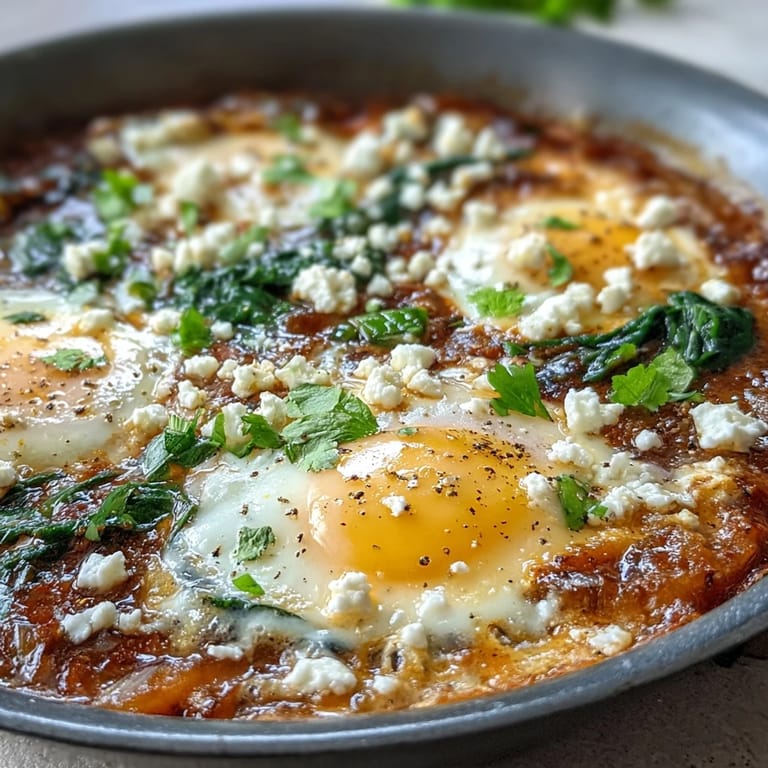
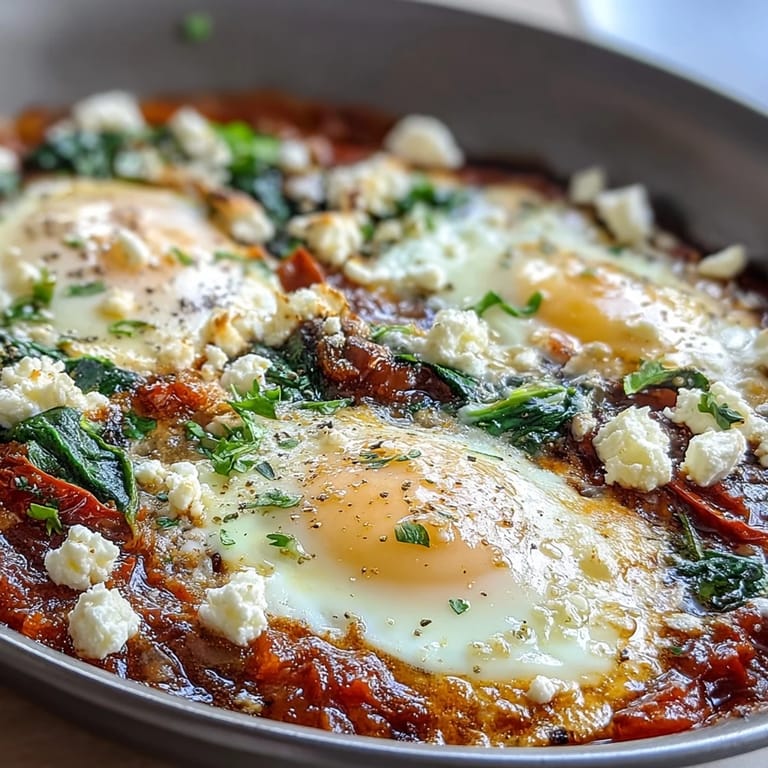
- Using the back of a spoon, make small wells or shallow indentations in the sauce—don't dig all the way to the bottom. Crack your eggs directly into these wells, one at a time, being gentle so the yolks stay intact.
- Cook the eggs gently:
- Cover the skillet with a lid and lower the heat slightly, then cook for 6 to 8 minutes until the egg whites set but the yolks stay runny and glossy. You'll know it's done when the whites turn opaque and no longer jiggle, but the yolk still trembles slightly when you move the pan.
- Finish and serve:
- Remove from heat, scatter fresh cilantro or parsley across the top, and add crumbled feta if you like. Serve immediately with warm pita bread so you can scoop and dip while everything is still steaming.
 Pin it
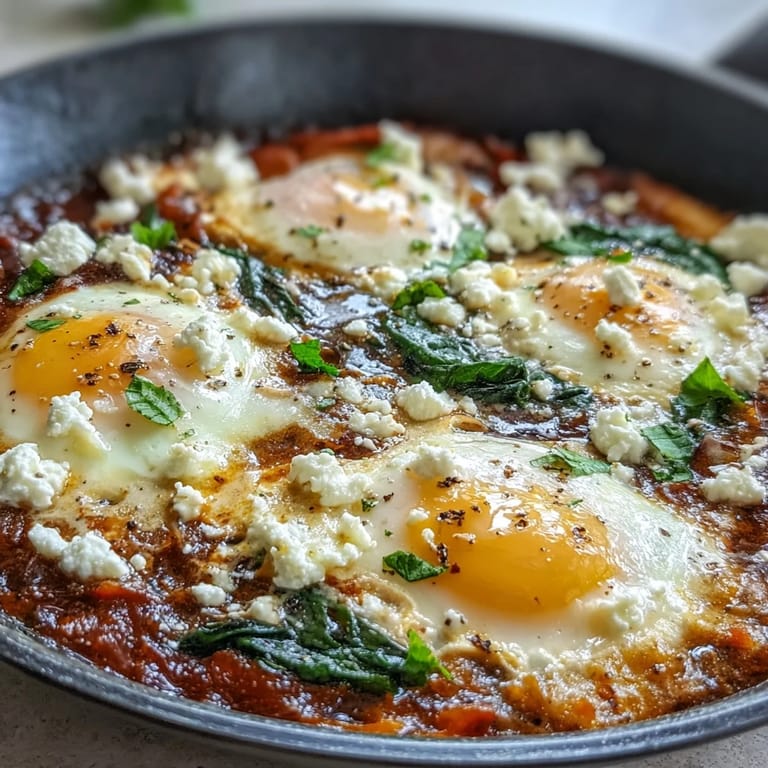
 The first time I served this to guests, I was terrified the eggs wouldn't cook right or the sauce would be too thin or too thick. Instead, everyone stopped talking mid-sentence when they saw those golden yolks breaking into the red sauce, and someone actually said, "This is the most beautiful thing I've ever seen in a bowl." That's when I realized this dish does something beyond feeding people—it makes a moment feel intentional.
Variations That Work
I've made this with roasted eggplant folded into the sauce, with chickpeas added for protein on meatless weeks, and once with sautéed kale instead of spinach when that's what I had on hand. Each version felt like its own complete dish rather than a compromise. You can also add a tablespoon of tomato paste to the spices if you want a deeper, more concentrated tomato flavor, or stir in a splash of red wine vinegar at the end for brightness.
The Science Behind the Sauce
The magic of this dish lives in how the vegetables, spices, and tomatoes transform into something greater than their individual parts. The onion breaks down and thickens the sauce naturally, the sugar balances the tomato's acidity so your mouth doesn't pucker, and the cumin and coriander create a warmth that feels almost comforting. The eggs cook gently in this environment, never scrambling or turning rubbery because the sauce provides insulation and moisture, and the runny yolk becomes a silky sauce all its own.
Serving and Storage Tips
This is best eaten the moment it comes off the heat while everything is hot and the yolks are still runny. If you have leftovers, the sauce keeps beautifully in the refrigerator for three or four days, though you'll want to add fresh eggs if you're reheating it. You can reheat the sauce gently on the stovetop, then add new eggs and cook them fresh for the best result.
- Serve alongside a simple yogurt or labneh for a cool contrast to the warm, spiced sauce.
- A sprinkle of sumac on top adds a bright, lemony note if you have it in your spice cabinet.
- If the pita bread cools down, wrap it in foil and warm it in a 350°F oven for 5 minutes so it steams back to life.
 Pin it
 This dish has become my answer to so many questions: what to make when I'm tired, what to serve when people are coming over, what to cook when I want to feel like I'm doing something worthwhile in the kitchen. There's something grounding about a bowlful of warm sauce, tender vegetables, and a runny egg that somehow makes everything feel more manageable.
Recipe FAQs
- → How do I know when the eggs are perfectly cooked?
The eggs are ready when the whites are completely set and opaque, but the yolks still jiggle slightly when you gently shake the pan. This usually takes 6-8 minutes covered. For firmer yolks, cook an additional 2-3 minutes.
- → Can I make this ahead of time?
You can prepare the tomato sauce up to 2 days in advance and store it in the refrigerator. Reheat gently before adding and poaching the eggs fresh. This actually improves the flavor as the spices meld together.
- → What can I substitute for the pita bread?
Crusty sourdough, naan bread, or even rice work well as alternatives. For low-carb options, serve with roasted vegetables or simply enjoy with a spoon. The sauce is hearty enough to stand alone.
- → How spicy is this dish?
The base version is mildly spiced with warm flavors from cumin, paprika, and coriander. The jalapeño and cayenne add adjustable heat. Omit both for a family-friendly version, or double them for spice enthusiasts.
- → Can I add other vegetables?
Absolutely. Diced zucchini, eggplant, or roasted red peppers blend beautifully. Add heartier vegetables like eggplant when sautéing the onions, and tender vegetables like spinach in the last few minutes.
- → What's the best skillet size for this?
A 12-inch skillet with a tight-fitting lid is ideal. You want enough surface area to create wells for all the eggs without overcrowding, which ensures even cooking. Cast iron retains heat beautifully for this dish.