 Pin it
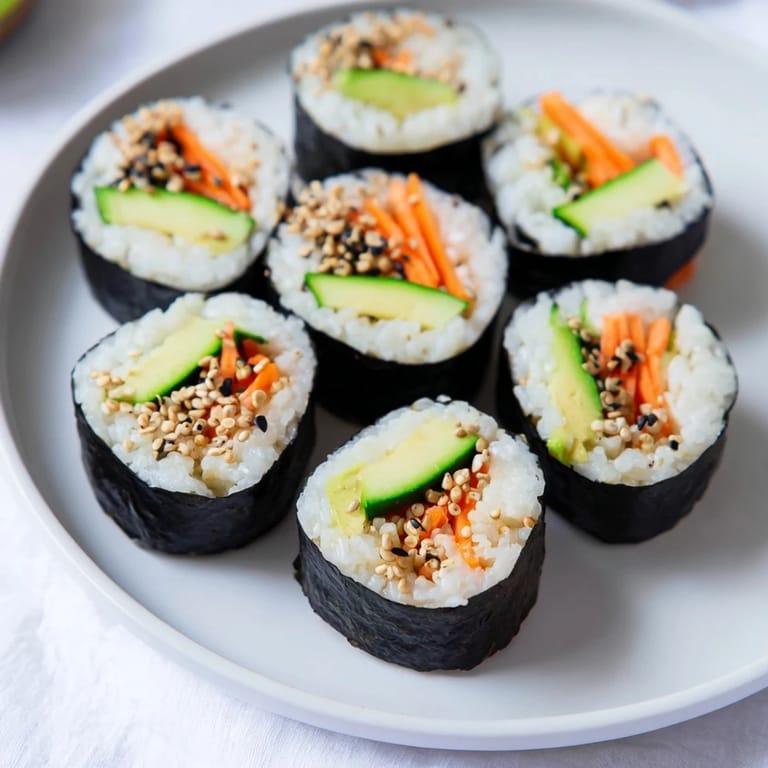
 My first attempt at making sushi at home was messier than I expected. I remember standing in my kitchen with a bamboo mat that felt foreign in my hands, wondering if I could actually pull this off without making a complete disaster. The moment the rice touched the nori and I started rolling, something clicked. There's a quiet satisfaction in creating something that looks almost restaurant-quality on your own counter, and these simple avocado and cucumber rolls taught me that you don't need fancy ingredients or years of practice to make something genuinely delicious.
I made these rolls for a friend who'd been stressed about her job, and she took one bite, closed her eyes, and just sat there quietly for a moment. That's when I realized these simple rolls had become something more than food in that moment—they were a little reset button we both needed. Now whenever I make them, I think about how something this uncomplicated can still feel thoughtful and nourishing.
Ingredients
- Sushi rice (1 cup): This isn't regular rice—the short grain starch creates that signature sticky texture that holds rolls together. Rinsing it thoroughly removes excess starch so your rolls don't turn into mush.
- Water (1 ½ cups): The ratio matters more than you'd think; too much and your rice becomes mushy, too little and you'll have crunchy bits.
- Rice vinegar (2 tbsp): This is what transforms plain rice into sushi rice with that subtle tang that wakes up every bite.
- Sugar (1 tbsp) and salt (½ tsp): Together these balance the vinegar's sharpness and bring out the rice's natural sweetness.
- Ripe avocado: Choose one that yields slightly to pressure but isn't mushy; you want it to slice cleanly and feel luxurious on your tongue.
- Cucumber (½ large, julienned): The crisp, cool counterpoint that keeps each bite fresh and prevents the roll from feeling heavy.
- Nori (4 sheets): The seaweed wrapper should feel papery and snap slightly when you fold it; that's how you know it's fresh.
- Sesame seeds, soy sauce, pickled ginger, wasabi: These are your flavor amplifiers and the little details that make homemade sushi taste complete.
Tired of Takeout? 🥡
Get 10 meals you can make faster than delivery arrives. Seriously.
One email. No spam. Unsubscribe anytime.
Instructions
- Prepare the rice foundation:
- Rinse your sushi rice under cold running water, stirring gently with your fingers, until the water runs completely clear—this takes patience but removes the starch that would otherwise make your rolls gluey. Combine the rinsed rice with water in a saucepan, bring to a rolling boil, then immediately cover and drop the heat to low, letting it simmer untouched for 18-20 minutes until every drop of water is absorbed.
- Season while warm:
- While the rice is still steaming, mix your rice vinegar, sugar, and salt in a small bowl and fold this mixture gently into the hot rice using a wooden spoon, working carefully so you don't mash the grains. Let it cool to room temperature—this step is crucial because warm rice will make your nori soggy and your rolls won't hold their shape.
- Set up your rolling station:
- Lay out your bamboo mat lined with plastic wrap, have a small bowl of water nearby to keep your hands moist, and arrange your avocado slices and julienned cucumber where you can easily reach them. Everything should feel organized and within arm's reach because once you start rolling, you need to move with intention.
- Build your first roll:
- Place one sheet of nori shiny side down on the mat, then wet your hands and spread a quarter of the cooled rice across the nori, leaving about an inch clear at the top—the rice should be thin enough that you can see the nori through it slightly. Arrange your avocado and cucumber in a thin line along the bottom edge where the rice starts, keeping everything centered.
- Roll with confidence:
- Using the mat to guide you, fold the bottom edge up and over the filling, pressing gently as you roll away from you, maintaining tension so the roll stays compact and doesn't unravel. When you reach the top, moisten that bare strip of nori with water to seal it, pressing gently for a few seconds until it holds.
- Slice with intention:
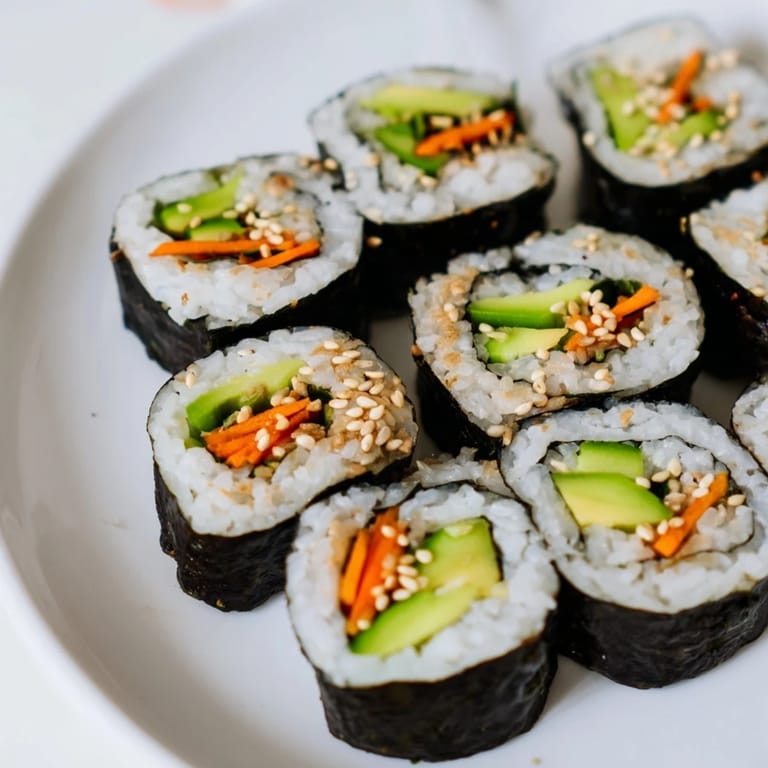
- Let each roll rest for a moment, then using a sharp, damp knife that you rinse between each cut, slice the roll into six to eight pieces with a single smooth motion rather than sawing back and forth. The moisture on the knife prevents rice from sticking and gives you clean, beautiful pieces.
- Serve immediately:
- Arrange your rolls cut-side up on a plate and serve with small dishes of soy sauce, pickled ginger, and wasabi on the side, letting everyone customize their experience.
 Pin it
 There was this one time I made these rolls for a casual dinner and my teenage nephew, who usually just picks at food, actually asked for seconds. Watching someone enjoy something your hands created, even if it's simple, feels like a small kind of magic. That's stuck with me.
Making Sushi Rice the Right Way
The secret to restaurant-quality sushi rice isn't an ingredient—it's patience and respect for the process. I used to rush through the rinsing step thinking it didn't matter, but once I committed to rinsing until the water ran truly clear, my rolls stopped feeling gloppy. The rice became distinct grains that held together without being sticky or mushy. It's a small shift in approach that completely changed the outcome.
Choosing and Preparing Your Vegetables
The quality of your avocado makes a genuine difference in how the whole roll tastes and feels. I learned this the hard way when I used an underripe avocado and the rolls tasted fine but lacked that creamy luxury that makes them special. Now I always choose avocados that yield slightly to gentle pressure, and I slice them just before assembling so they stay bright and fresh. For the cucumber, cutting it into thin, consistent matchsticks means it distributes evenly throughout each bite instead of clumping in one section.
Rolling Technique and Troubleshooting
The rolling is where people often get anxious, but it's actually the most forgiving part once you understand what you're doing. Your hands should stay moist but not dripping, the mat should stay taut under your fingers, and you should press firmly but not aggressively—think of it as guiding the roll together rather than wrestling it. I've made rolls that were too loose, and they fell apart when I sliced them, and rolls that were too tight, and they felt dense rather than delicate. The sweet spot is when you feel the ingredients compress into a cohesive bundle with just enough resistance to know it's holding.
- If your rolls keep unraveling, the sealing strip of nori wasn't moist enough—use enough water to make it tacky but not dripping.
- If your slices are squishing and the rice is sticking to your knife, wipe and re-dampen the blade more frequently.
- If your rolls taste bland, the rice probably wasn't seasoned well; taste it before rolling and adjust the vinegar or salt.
 Pin it
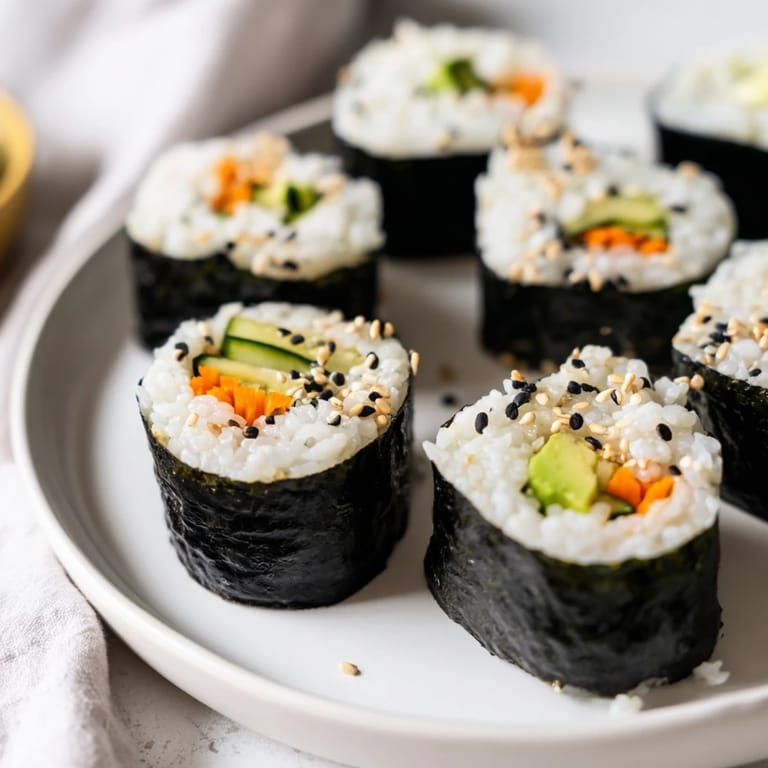
 Making sushi at home stopped feeling like something I was doing and started feeling like something I was sharing. These simple rolls remind me that the best meals are often the ones where the ingredients step back and let the care speak.
Recipe FAQs
- → What type of rice is best for these rolls?
Sushi rice works best due to its sticky texture, allowing the rolls to hold together well.
- → Can I substitute avocado with another ingredient?
You can try ripe mango or ripe tofu slices for a different but complementary texture and flavor.
- → How do I keep the rolls from falling apart?
Use moist hands to spread rice evenly on nori and roll tightly with a bamboo mat to secure the fillings.
- → Are these rolls suitable for gluten-free diets?
Yes, use tamari instead of soy sauce to keep the dish gluten-free.
- → What tools are needed for preparation?
A bamboo rolling mat, a sharp knife, and a small saucepan are essential for making perfect rolls.