 Pin it
 I stumbled onto this galette one rainy October afternoon when I had three perfectly ripe pears sitting on the counter and no plan whatsoever. The idea of rolling out pastry felt easier than fussing with a pie tin, and I had a knob of crystallized ginger left over from holiday baking. What came out of the oven was golden, crackly, and so good warm that I ate a quarter of it standing at the stove. It's been my go-to ever since when I want something that looks impressive but doesn't require precision or stress.
I made this for a small dinner party once, and everyone went quiet after the first bite. One friend said it tasted like fall in France even though none of us had been. The crust shattered perfectly, the pears were soft and lightly spiced, and the ginger left this lingering tingle that made you want another forkful. I served it with a scoop of vanilla ice cream that melted into the warm filling, and it became one of those meals people still bring up years later.
Ingredients
- All-purpose flour: Forms the structure of the pastry and works beautifully when kept cold and handled gently.
- Unsalted butter, cold and cubed: The key to flaky layers is keeping it firm until it hits the oven, so freeze the cubes for ten minutes if your kitchen is warm.
- Salt: Balances the sweetness and brings out the buttery richness in every bite of crust.
- Ice water: Brings the dough together without warming the butter, and you only need enough to make it hold.
- Granulated sugar (for pastry): Adds a whisper of sweetness to the dough that complements the fruit without competing.
- Ripe pears, peeled, cored, and thinly sliced: Choose firm-ripe pears like Bosc or Anjou so they soften but hold their shape during baking.
- Crystallized ginger, finely chopped: Gives little bursts of sweet heat throughout the filling and pairs beautifully with the tender pears.
- Light brown sugar: Adds molasses depth that makes the filling taste richer and more caramelized.
- Lemon juice: Brightens the pears and keeps them from browning while you prep everything else.
- Ground ginger: Reinforces the crystallized ginger with warmth and a gentle spice note.
- Ground cinnamon: Rounds out the spice blend and makes the whole galette smell like a cozy bakery.
- Cornstarch: Thickens the juices so the filling stays put instead of making the bottom soggy.
- Egg, beaten: Brushed on the edges, it creates a glossy golden finish that looks bakery-perfect.
- Turbinado or coarse sugar: Optional but wonderful for adding crunch and sparkle to the crust.
Tired of Takeout? 🥡
Get 10 meals you can make faster than delivery arrives. Seriously.
One email. No spam. Unsubscribe anytime.
Instructions
- Make the pastry dough:
- In a large bowl, whisk together flour, sugar, and salt until evenly mixed. Add the cold butter cubes and rub them in with your fingertips or a pastry blender until the mixture looks like coarse sand with a few pea-sized bits still visible. Drizzle in ice water one tablespoon at a time, tossing gently with a fork until the dough just begins to clump together without being wet or sticky.
- Chill the dough:
- Shape the dough into a flat disk, wrap it tightly in plastic wrap, and refrigerate for at least 30 minutes. This rest helps the gluten relax and keeps the butter cold so the crust bakes up flaky and tender.
- Prepare the pear filling:
- In a medium bowl, toss the sliced pears with lemon juice, brown sugar, chopped crystallized ginger, ground ginger, cinnamon, and cornstarch until every slice is lightly coated. The filling will look juicy and fragrant, and you might sneak a taste of the gingery pear.
- Preheat and prep:
- Heat your oven to 400°F (200°C) and line a baking sheet with parchment paper. Having everything ready makes the assembly smooth and stress-free.
- Roll out the pastry:
- On a lightly floured surface, roll the chilled dough into a rough 12-inch round, turning it often and adding just enough flour to keep it from sticking. Don't worry about perfect edges, uneven circles are part of the charm.
- Assemble the galette:
- Transfer the dough round to your prepared baking sheet and spoon the pear mixture into the center, leaving a 2-inch border all around. Fold the edges up and over the filling, pleating the dough loosely as you go and pressing gently so it holds its shape.
- Brush and sprinkle:
- Brush the folded pastry edges with beaten egg, then sprinkle turbinado sugar over the top if you like a little sparkle and crunch. The egg wash turns the crust beautifully golden as it bakes.
- Bake until golden:
- Slide the baking sheet into the oven and bake for 35 to 40 minutes, until the crust is deeply golden and the filling is bubbling at the center. Your kitchen will smell like butter, ginger, and caramelized fruit.
- Cool and serve:
- Let the galette cool on the baking sheet for at least 10 minutes before slicing. Serve it warm or at room temperature, with a dollop of whipped cream or a scoop of vanilla ice cream if you want to make it extra special.
 Pin it
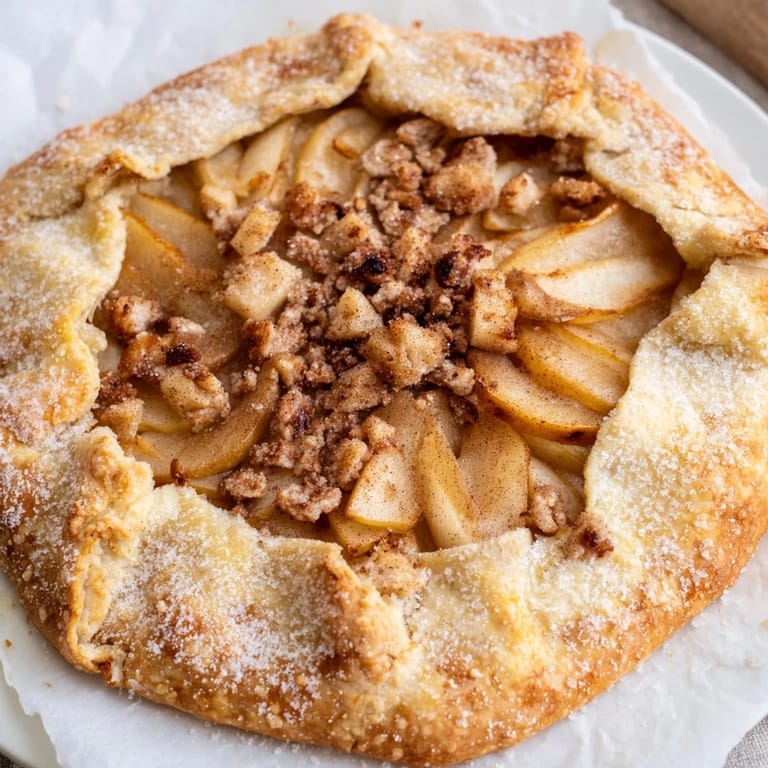
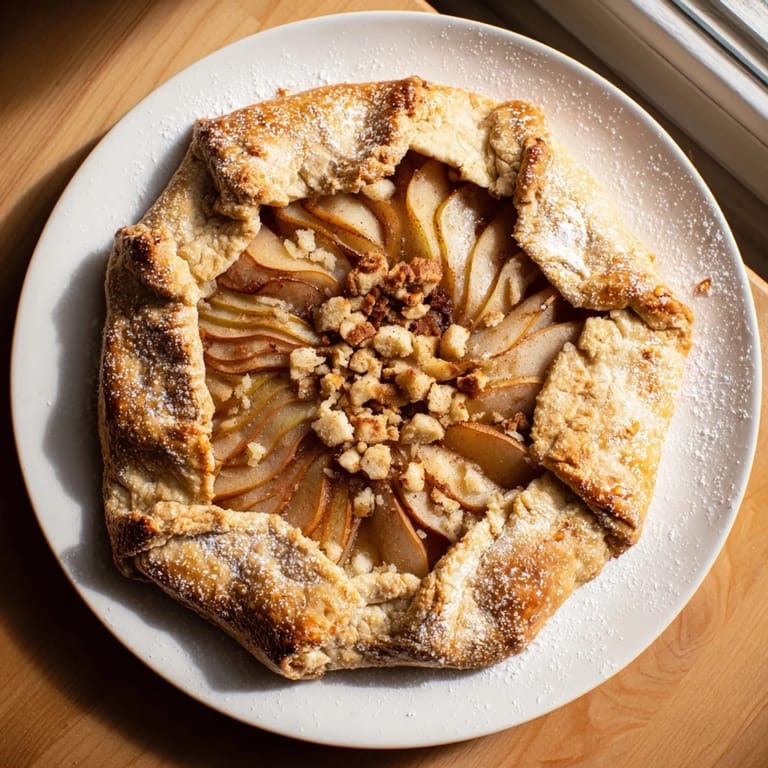
 There's something about pulling a galette out of the oven that makes you feel like a real baker even if you've never made pie dough before. The edges are crinkled and golden, the filling peeks through in sticky, caramelized patches, and the whole thing looks like it came from a French countryside kitchen. I love that it doesn't need to be perfect to be absolutely delicious, and every time I make it, someone asks for the recipe.
Choosing the Right Pears
I've learned that firm-ripe pears like Bosc or Anjou hold their shape best during baking and don't turn to mush. If your pears are rock-hard, let them sit on the counter for a day or two until they yield slightly to gentle pressure near the stem. Overly soft pears will release too much juice and make the filling watery, so timing matters more than you'd think.
Working with Galette Dough
The first time I made galette dough, I overworked it and ended up with a tough crust that tasted more like crackers than pastry. Now I know to mix just until the dough comes together and to handle it as little as possible. If it cracks while you're folding the edges, just press it gently back together, it's supposed to look handmade and a little imperfect.
Serving and Storing
This galette is at its absolute best the day it's baked, when the crust is still crisp and the filling is warm and gooey. Leftovers keep in the fridge for up to two days, and I reheat slices in a 350°F oven for about ten minutes to bring back some of that fresh-baked texture. You can also swap the pears for apples or add a handful of fresh berries if you want to change things up.
- Try serving it with a drizzle of honey or a sprinkle of flaky sea salt for contrast.
- Make the dough a day ahead and keep it wrapped in the fridge to save time.
- Use parchment paper to transfer the rolled dough easily without tearing it.
 Pin it
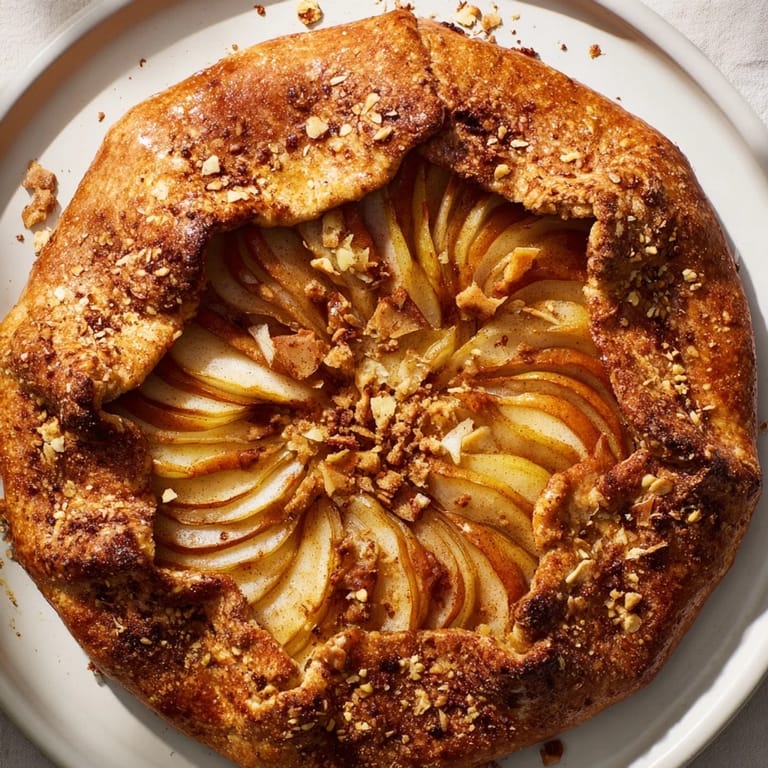
 Every time I fold the dough around those spiced pears and watch it turn golden in the oven, I'm reminded that the best desserts don't need to be fussy or perfect. This galette is proof that simple ingredients and a little courage in the kitchen can create something people remember long after the last crumb is gone.
Recipe FAQs
- → What type of pears works best for this galette?
Firm-ripe pears that hold their shape, such as Bosc or Bartlett, are ideal for maintaining texture during baking.
- → Can I add more ginger flavor?
Yes, adding a teaspoon of freshly grated ginger to the filling intensifies the ginger aroma and warmth.
- → How should I store leftovers?
Store galette leftovers in an airtight container in the refrigerator for up to two days to keep the pastry flaky.
- → What can I substitute for crystallized ginger?
If unavailable, finely chopped candied ginger or a mix of ground ginger and a touch of fresh ginger can be used as alternatives.
- → Is it necessary to chill the dough before baking?
Chilling the dough for at least 30 minutes helps relax gluten and keeps the pastry flaky during baking.
- → Can I add other fruits to this galette?
Adding berries or substituting apples for pears offers delicious variations and complements the ginger-spiced filling.