 Pin it
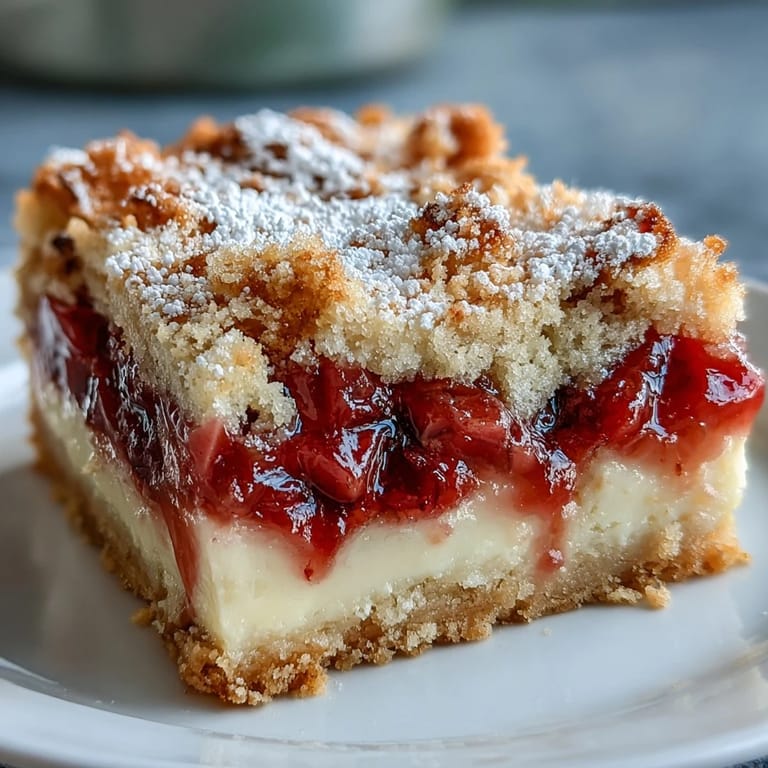
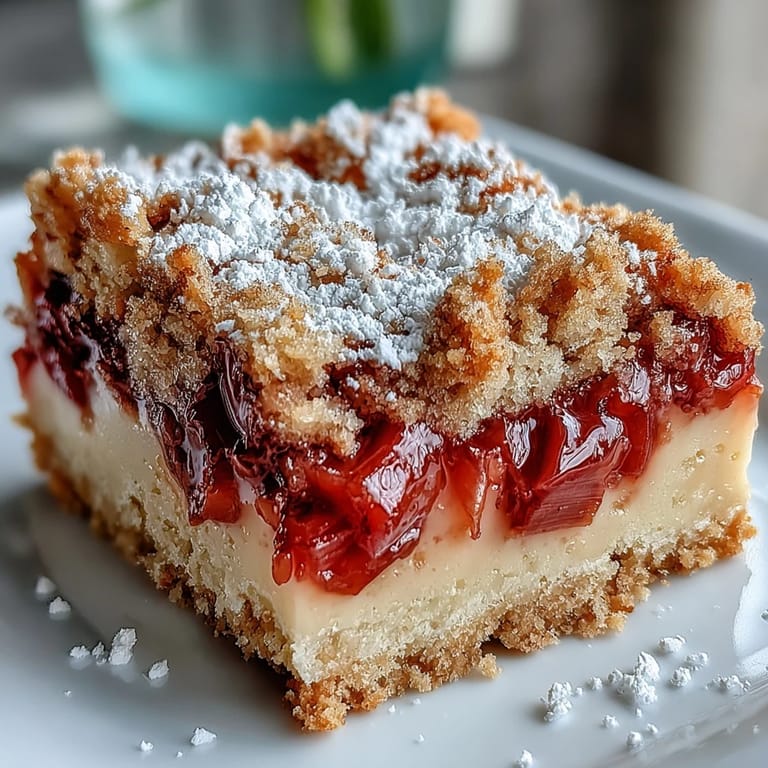
 When rhubarb first appears at the market, I can't help but scan my pantry for butter and eggs. There's something about the tart scent of those pink stalks that nudges me toward baking these custard bars. I still remember the pitter-patter of rain against the kitchen window as I measured flour, the oven humming quietly in the background. These bars quickly became my unofficial 'welcome spring' treat. Somehow, their vivid color and puckery flavor feel like a reward for surviving winter.
I brought a pan of these bars to a neighbor's brunch and watched her eyes light up after the first bite. She admitted she usually avoids rhubarb, but the creaminess of the custard and that crackly powdered sugar convinced her otherwise. Now she asks for the recipe every April.
Ingredients
- Unsalted butter: Softened butter creates a tender, melt-in-your-mouth shortbread base; I always take it out of the fridge first thing in the morning.
- Granulated sugar: Fine texture works best for both the crust and the custard; I discovered coarser sugar leads to a gritty bite.
- All-purpose flour: Keeps the crust delicate without being too crumbly, and it thickens the custard just right.
- Salt: Just a pinch brings out the flavors—don't be tempted to skip it.
- Fresh rhubarb: The brighter the stalks, the tangier the bars; be sure to chop it evenly so it cooks through.
- Eggs: Room-temperature eggs blend more easily into the custard for a silkier result.
- Heavy cream: Adds richness and a custardy wobble that makes these bars so luscious.
- Pure vanilla extract: A little hint brings warmth to the filling.
- Powdered sugar (for garnish): A dusting before serving makes them look extra special and balances the tartness.
Tired of Takeout? 🥡
Get 10 meals you can make faster than delivery arrives. Seriously.
One email. No spam. Unsubscribe anytime.
Instructions
- Get Ready:
- Turn the oven dial to 350F (175C) and line a 9x13-inch pan with parchment so the bars lift out like a dream.
- Shortbread Magic:
- Cream your softened butter and sugar in a mixing bowl until they're nearly fluffy, then work in flour and salt with gentle persistence until a soft dough forms.
- Shape and Bake:
- Press the dough evenly in the pan, smoothing the edges with a spatula—feel free to use your fingers for corners—then bake until barely golden, about 18 to 20 minutes.
- Prep the Rhubarb:
- While the crust is baking, toss fresh rhubarb with sugar in a bowl and let it macerate until glistening; this helps soften it just enough for baking.
- Whisk Up Custard:
- In a separate bowl, whisk the eggs and sugar till blended, then stir in flour, heavy cream, vanilla, and a pinch of salt—keep going until silky smooth.
- Layer and Pour:
- Scatter the glistening rhubarb over the warm, baked crust and immediately pour the custard all over; it will seep down through the bright pieces.
- Bake Again:
- Return the pan to the oven for 35–40 minutes until the center is just set and the top blushing gold, the kitchen filling with that unmistakable sweet-tart aroma.
- Cool and Finish:
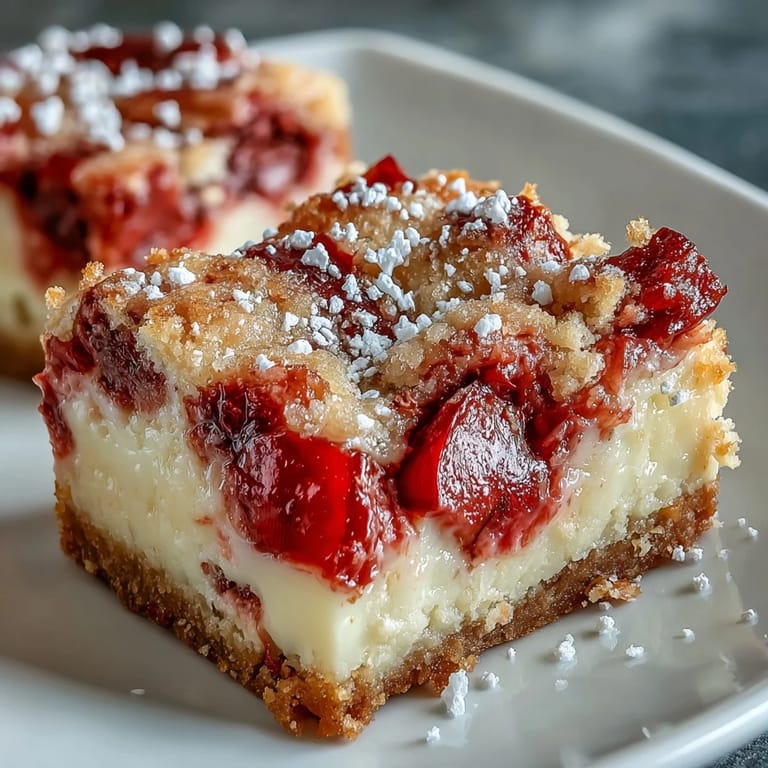
- Let the bars cool completely before dusting generously with powdered sugar, then slice and serve (chilled or room temp is perfect).
 Pin it
 It was during a picnic at the park that these bars went from a simple dessert to a conversation starter. Somehow, a single tray bridged the gap between strangers who started swapping stories about childhood rhubarb patches and favorite grandmothers' baking mishaps.
Swapping Flavors for Fun
One spring I swapped out half the rhubarb for chopped strawberries when my local produce stand had both on offer. The resulting bars had a jammy, extra-bright layer; everyone thought it was an intentional celebration of the changing seasons.
Crust Upgrades and Twists
If you're in the mood for extra crunch, a handful of chopped pecans or walnuts mixed into the shortbread dough gives the base a nuanced, toasty snap. I tried it once on a whim after finding a forgotten bag of pecans in my freezer, and now I rarely skip it.
Serving Suggestions and Leftover Love
For gatherings, I like to cut the bars a bit smaller for bite-sized treats perfect for sharing. These store well chilled, which means you can sneak a piece even days later—not that there ever seem to be leftovers in my house!
- Creamy custard sets best if bars cool overnight in the fridge.
- Line the pan fully so you can lift the slab out easily.
- For super sharp squares, wipe your knife between cuts.
 Pin it
 May these rhubarb custard bars bring a touch of brightness to your table and spark new stories in your kitchen. Enjoy every tangy, buttery bite.
Recipe FAQs
- → How can I tell when the custard is properly set?
The custard should be mostly firm with a slight wobble in the center; edges will be set and lightly golden. It will continue to firm as it cools, so avoid overbaking to keep a silky texture.
- → My rhubarb is very tart — how can I balance the flavor?
Toss the chopped rhubarb with sugar and let it macerate briefly to soften sharpness. You can substitute half the rhubarb with strawberries or add a touch more sugar to the rhubarb layer to taste.
- → How do I prevent a soggy bottom crust?
Bake the shortbread crust until just golden before adding the rhubarb and custard; a hot crust helps seal the surface. Drain excess rhubarb juices or toss with a little flour to absorb moisture.
- → Can I make these ahead of time?
Yes — bake and cool completely, then refrigerate. Chilled bars slice cleaner and develop flavor after a few hours. Keep refrigerated for 3–4 days; bring to room temperature briefly before serving if desired.
- → Are there good mix-ins or crust variations?
For extra texture, stir 1/2 cup chopped nuts into the shortbread dough or sprinkle on top of the crust before baking. Swap part of the rhubarb for strawberries for added sweetness and color.
- → Can these be frozen?
Yes — cut into portions and freeze in a single layer on a baking sheet, then transfer to an airtight container. Thaw overnight in the refrigerator and serve chilled or at room temperature.